Maa Chandraghanta 2026: Mantra, Puja Vidhi, Bhog & Significance
Maa Chandraghanta 2026: Mantra, Puja Vidhi, Bhog and Significance
The third day of Shardiya Navratri is dedicated to Maa Chandraghanta, the third form of Goddess Durga. Her divine appearance combines serenity with strength, representing courage, protection, alertness and the ability to face difficulties without fear.
In 2026, Navratri Day 3 falls on Tuesday, October 13. Devotees worship Maa Chandraghanta with prayers, mantra chanting, flowers, aarti and traditional offerings. Milk and milk-based preparations such as kheer are commonly offered as bhog, while red is the colour popularly associated with the day.
Whether you are preparing for a traditional puja at home or want to understand the spiritual meaning of this form of the Goddess, here is a guide to Maa Chandraghanta's story, mantra, puja vidhi, bhog and significance.
Who Is Maa Chandraghanta?
Maa Chandraghanta is the third of the nine forms of Goddess Durga, collectively known as Navdurga. Her name combines two Sanskrit-derived words: Chandra, meaning moon, and Ghanta, meaning bell.
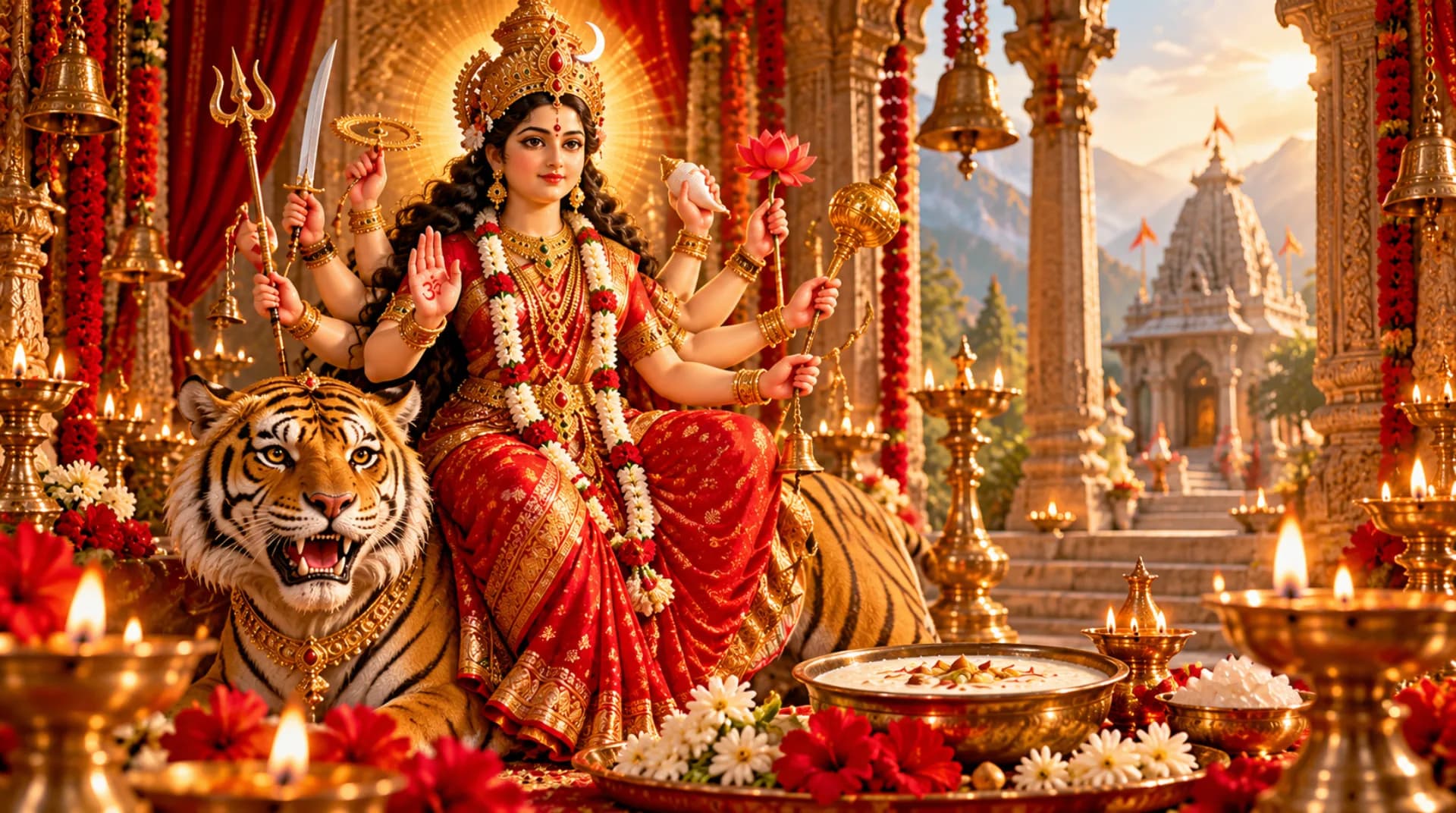
The Goddess is recognised by the crescent moon on her forehead, traditionally described as resembling a bell. Her form is often depicted with ten hands carrying various weapons and sacred objects. She is shown riding a lion or tiger, depending on the artistic depiction and tradition.
Her appearance expresses two qualities together: a calm and compassionate presence, and the strength to confront danger when necessary. For devotees, Maa Chandraghanta represents courage, inner strength, protection and fearlessness.
The Story and Symbolism of Maa Chandraghanta
In the devotional sequence of Navdurga, the first three forms represent different stages of the Goddess's story. Maa Shailputri is associated with her birth as the daughter of the mountains, while Maa Brahmacharini represents penance and spiritual discipline. Maa Chandraghanta is worshipped as the powerful form of the Goddess whose married life and divine strength are brought together.
The crescent moon on her forehead gives her the name Chandraghanta. Her bell imagery is traditionally associated with alertness and the removal of negative forces, while her weapons represent readiness to protect devotees.
Her symbolism can be understood through three important qualities:
Courage: Facing challenges instead of allowing fear to control one's decisions.
Protection: Seeking the Goddess's grace and strength during difficult circumstances.
Balance: Maintaining a peaceful mind while remaining firm and decisive when required.
These qualities make Maa Chandraghanta's worship meaningful to devotees who seek courage and steadiness in daily life.
Maa Chandraghanta Mantra
The commonly recited mantra for Maa Chandraghanta is:
ॐ देवी चन्द्रघण्टायै नमः॥
Transliteration: Om Devi Chandraghantayai Namah.
Meaning: I bow to Goddess Chandraghanta.
Devotees may chant this mantra during morning or evening worship, repeating it with a calm and focused mind. Those who follow a regular japa practice may recite it 108 times using a mala, according to their personal tradition.
Maa Chandraghanta Prarthana Mantra
पिण्डज प्रवरारूढा चण्डकोपास्त्रकैर्युता।
प्रसादं तनुते मह्यम् चन्द्रघण्टेति विश्रुता॥
This traditional prayer invokes Maa Chandraghanta in her powerful form and seeks her grace.
Maa Chandraghanta Puja Vidhi for Navratri Day 3
Devotees can perform a simple puja at home according to their family and regional traditions. The following steps offer a practical guide.
Step 1: Prepare the Puja Area
Bathe, wear clean clothes and clean the place of worship. Place an image or idol of Maa Durga or Maa Chandraghanta in the puja area.
Step 2: Continue the Kalash Worship
If Ghatasthapana was performed on the first day of Navratri, continue the daily worship of the Kalash according to your household custom.
Step 3: Light a Diya
Light a diya before the Goddess. Incense may also be offered where customary. Keep flames away from curtains and other flammable objects.
Step 4: Offer Flowers and Puja Samagri
Offer fresh flowers, roli or kumkum, akshat, water and other items traditionally used in your family puja. Red flowers are a popular choice for this day; jasmine is also listed in traditional devotional references associated with Maa Chandraghanta.
Step 5: Offer Bhog
Offer milk, kheer or another suitable vegetarian preparation. Fruits and other simple sattvic offerings may be included according to family custom.
Step 6: Chant the Mantra
Recite “ॐ देवी चन्द्रघण्टायै नमः॥” with devotion. You may also read the prarthana mantra or recite a Durga prayer followed in your household.
Step 7: Perform Aarti
Conclude the puja with Maa Durga's aarti and pray for courage, peace, strength and the well-being of your family. Share the bhog as prasad after the worship.
The sequence and materials can differ across traditions. An elaborate arrangement is not necessary if a simple and sincere prayer is more suitable for your home.
What Bhog Is Offered to Maa Chandraghanta?
Milk and milk-based preparations are commonly offered to Maa Chandraghanta on the third day of Navratri.
Traditional offerings may include:
Kheer: Rice kheer or vermicelli kheer.
Milk: Offered according to household puja practices.
Milk-based sweets: Suitable sweets prepared or selected according to family custom.
Fruits and mishri: Simple offerings that may accompany the main bhog.
Other sattvic prasad: Chosen according to personal and regional traditions.
After the puja, the offering is distributed as prasad. Families observing a Navratri fast should choose ingredients and preparations that fit their usual vrat practices.
Which Colour Is Associated with Navratri Day 3 in 2026?
Red is the commonly listed colour for Tuesday, October 13, 2026. In Navratri colour traditions, red is associated with energy, strength, courage and devotion.
Devotees who follow the day-wise colour custom may wear red clothing, offer red flowers or include red in the puja arrangement. These practices are optional, and colour lists can differ by regional calendar or family tradition.
Spiritual Significance of Maa Chandraghanta
Maa Chandraghanta's worship is associated with courage, protection and the strength to face difficult situations. Her peaceful yet powerful form reflects the idea that calmness and determination can exist together.
Courage in difficult moments: Her symbolism reminds devotees to meet challenges with a steady mind rather than surrendering to fear.
Strength with compassion: The Goddess's form combines a serene appearance with the readiness to protect, representing strength that serves a purpose.
Alertness and awareness: The bell-shaped crescent is an important part of her identity and is traditionally linked to alertness and the driving away of negative forces.
Faith and reflection: Navratri offers devotees an opportunity to strengthen their spiritual practice and reflect on the qualities they wish to develop in their everyday lives.
For those observing the festival, the third day is a time to offer prayers, renew their resolve and seek the Goddess's grace for peace and strength.
Frequently Asked Questions About Maa Chandraghanta
1. When is Maa Chandraghanta Puja in 2026?
Maa Chandraghanta is worshipped on the third day of Shardiya Navratri, which falls on Tuesday, October 13, 2026.
2. What is the mantra of Maa Chandraghanta?
The commonly recited mantra is “ॐ देवी चन्द्रघण्टायै नमः॥” (Om Devi Chandraghantayai Namah).
3. What bhog should be offered to Maa Chandraghanta?
Milk, kheer and milk-based sweets are commonly offered. Fruits, mishri and other suitable vegetarian preparations may also be included according to household tradition.
4. Which colour should devotees wear on Day 3 of Navratri 2026?
Red is the commonly listed colour for Day 3 in 2026. Devotees may wear red or use red flowers in their worship, but this is not compulsory.
5. Can Maa Chandraghanta be worshipped at home?
Yes. Devotees may worship the Goddess at home with a picture or idol, a diya, flowers, suitable bhog, mantra chanting and aarti, following their family customs.
6. What does Maa Chandraghanta symbolise?
Maa Chandraghanta represents courage, strength, protection and fearlessness. Her form combines peacefulness with readiness to confront difficulties.
Seek Courage and Inner Strength Through Maa Chandraghanta's Worship
The third day of Shardiya Navratri celebrates Maa Chandraghanta, whose form symbolises courage, awareness and protection. Through prayer, mantra chanting and traditional offerings, devotees express their faith and seek strength to navigate life's challenges.
May Maa Chandraghanta bless everyone with peace, courage, wisdom and strength.
Jai Mata Di!
For the full festival schedule, Ghatasthapana details and an overview of all nine forms of Goddess Durga, read our Shardiya Navratri 2026 guide. You can also read our guide to Maa Brahmacharini, worshipped on Navratri Day 2.
AI-powered astrological guidance based on your exact birth details — available 24/7
Try ChatKarmic Free →