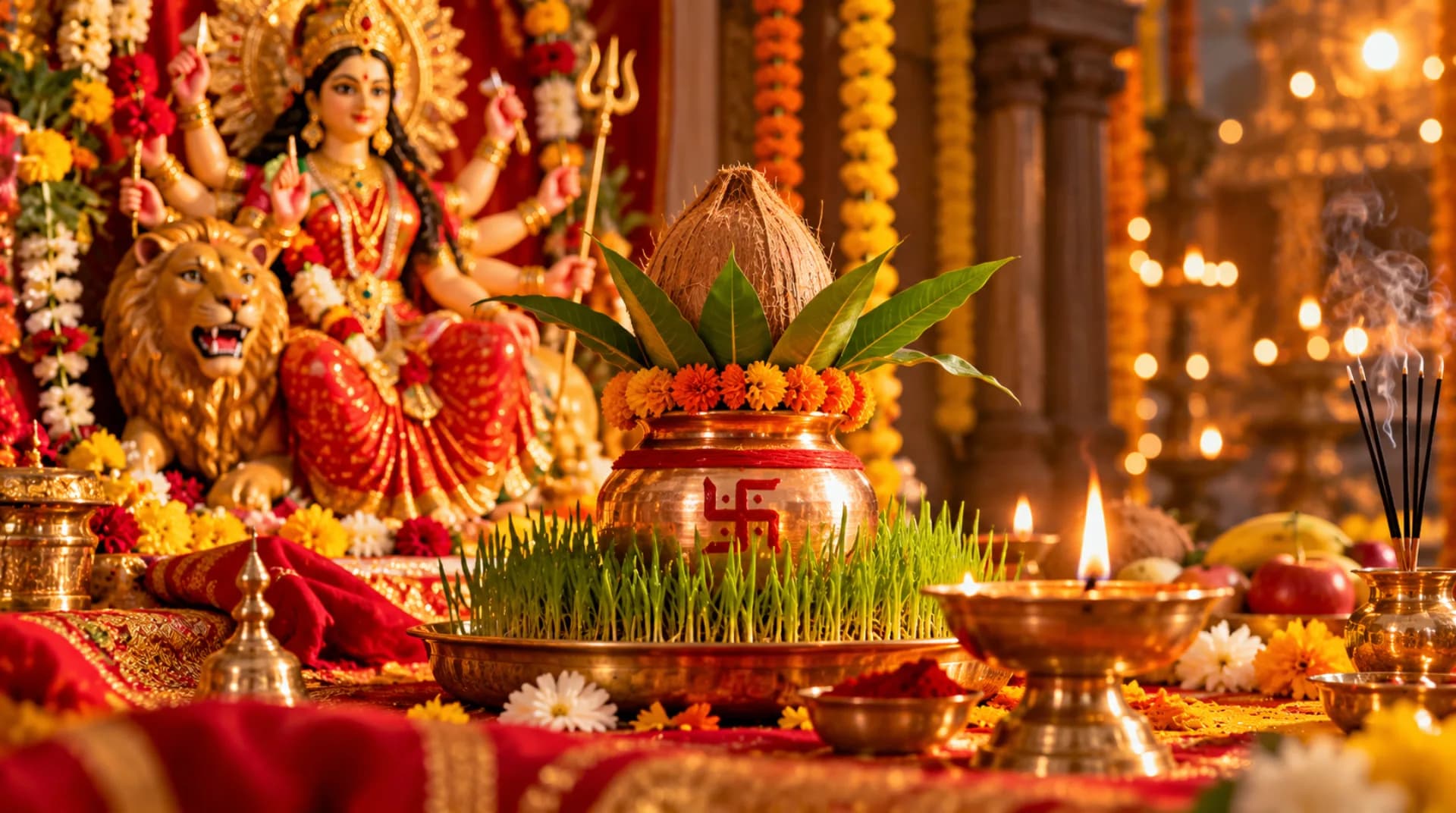
Shardiya Navratri 2026: Date, Ghatasthapana Muhurat & Puja Vidhi
Shardiya Navratri 2026: Date, Ghatasthapana Muhurat, Puja Vidhi and Significance
Shardiya Navratri is one of the most important festivals dedicated to Goddess Durga. Across India, devotees welcome the nine forms of the Divine Mother through prayer, fasting, devotional singing, traditional rituals and acts of devotion.
In 2026, Shardiya Navratri begins on Sunday, October 11, and continues through October 19. Vijayadashami, also celebrated as Dussehra, falls on October 20.
If you are preparing to observe Navratri at home, this guide covers the festival dates, Delhi's Ghatasthapana muhurat, the traditional Kalash Sthapana process, the nine forms of Maa Durga and the spiritual meaning of the festival.
Shardiya Navratri 2026: Important Dates
Navratri begins: Sunday, October 11, 2026
Navratri concludes: Monday, October 19, 2026
Vijayadashami/Dussehra: Tuesday, October 20, 2026
Navratri is observed over nine nights in honour of the Divine Mother. The festival's exact observances can vary by region, family tradition and local Panchang.
Ghatasthapana Muhurat 2026
Ghatasthapana, also known as Kalash Sthapana, marks the beginning of Navratri worship in many Hindu households. The ritual symbolises the invocation of divine presence and the start of the period of devotion.
For New Delhi on October 11, 2026, the listed timings are:
Ghatasthapana Muhurat: 6:19 AM to 10:12 AM
Abhijit Muhurat: 11:44 AM to 12:31 PM
These timings are specific to Delhi. Sunrise and Panchang calculations vary by location, so devotees in other cities should consult their local Panchang before performing the ritual.
The main muhurat overlaps with Chitra Nakshatra and Vaidhriti Yoga. Traditional Panchang guidance advises avoiding these factors where possible, but they are not described by Drik Panchang as absolute prohibitions. If you follow a particular family or regional tradition, use the guidance appropriate to that tradition.
What Is Ghatasthapana?
Ghatasthapana is the ritual installation of a sacred pot, or Kalash, at the beginning of Navratri. In many traditions, the Kalash is placed on prepared soil where barley seeds, known as jau, are sown.
The growing barley shoots are traditionally associated with growth, renewal and prosperity. The Kalash, water, leaves and coconut form part of a ritual arrangement through which devotees express reverence for the Divine Mother.
The exact materials and steps may differ between households and regions.
Navratri Puja Samagri
Families commonly prepare the following items for Ghatasthapana and daily worship:
A clean Kalash, traditionally made of clay, copper or brass
Clean soil and a shallow tray for sowing barley seeds
Barley seeds (jau)
Clean water and, according to family tradition, Gangajal
Mango or Ashoka leaves
A coconut
A coin, betel nut and unbroken rice grains
Red or yellow cloth and sacred thread
Flowers, kumkum, turmeric and Akshat
A diya, cotton wicks and suitable oil or ghee
Incense, fruits and offerings for the puja
You do not need to treat this list as a rigid requirement. Customs differ, and the items used should reflect your family's tradition and practical circumstances.
How to Perform Ghatasthapana at Home
The following is a general outline of the ritual. If your family follows a specific method, follow that tradition.
1. Clean the worship area
Clean the space where you intend to perform the puja. Arrange a small platform or chowki and place an image or idol of Maa Durga.
2. Prepare the soil and barley seeds
Place clean soil in a shallow tray and sow the barley seeds. Sprinkle a little water so the soil remains moist.
3. Prepare the Kalash
Fill the Kalash with clean water. Depending on your tradition, add a coin, betel nut and a few grains of unbroken rice. Arrange mango or Ashoka leaves around its opening.
4. Place the coconut
Place a coconut on the Kalash if that is part of your household's ritual practice. Some families wrap it in a red cloth and tie it with sacred thread.
5. Offer prayers and make a sankalpa
Sit calmly, offer flowers and perform the prayer according to your tradition. A sankalpa is an expression of your intention to observe the festival with devotion.
6. Continue daily worship
During Navratri, devotees may offer flowers, light a diya, recite prayers or mantras, observe a fast and participate in aarti. Practices vary according to personal capacity and family customs.
If you keep an Akhand Deepak burning continuously, place it on a stable, heat-resistant surface and away from curtains, decorations and other flammable materials. Never leave an open flame unattended.
The Nine Forms of Maa Durga
Each day of Navratri is traditionally associated with one of the nine forms of the Goddess:
Maa Shailputri — associated with strength and steadfastness.
Maa Brahmacharini — associated with devotion, discipline and perseverance.
Maa Chandraghanta — associated with courage and protection.
Maa Kushmanda — associated with creative energy and vitality.
Maa Skandamata — associated with motherhood and compassion.
Maa Katyayani — associated with courage and determination.
Maa Kalaratri — associated with protection and the overcoming of fear.
Maa Mahagauri — associated with purity and peace.
Maa Siddhidatri — associated with spiritual fulfilment and blessings.
The forms and their interpretations come from Hindu devotional traditions. The manner of worship may differ across regions.
Why Is Shardiya Navratri Celebrated?
In Hindu tradition, Navratri celebrates the power of the Divine Mother and the victory of good over evil. The festival is commonly connected with the story of Goddess Durga's victory over Mahishasura.
Its meaning extends beyond ritual. For many devotees, the nine days offer an opportunity to practise self-discipline, prayer, gratitude and reflection. Fasting, when observed, may be understood as a devotional practice rather than a requirement that is identical for everyone.
Navratri is also celebrated in different ways across India. Garba and Dandiya are especially associated with Gujarat, while other regions have their own devotional songs, temple rituals and cultural observances.
Frequently Asked Questions
When does Shardiya Navratri begin in 2026?
Shardiya Navratri begins on Sunday, October 11, 2026, and continues through October 19. Vijayadashami/Dussehra falls on October 20.
What is the Ghatasthapana muhurat in Delhi?
For October 11, 2026, the listed Delhi Ghatasthapana muhurat is 6:19 AM to 10:12 AM. The alternative Abhijit muhurat is 11:44 AM to 12:31 PM. Check your local Panchang if you live elsewhere.
What is needed for Kalash Sthapana?
Common items include a Kalash, clean water, soil, barley seeds, leaves, a coconut, flowers, a diya and puja offerings. Specific requirements vary by family and region.
Is fasting compulsory during Navratri?
Fasting is a personal and devotional observance. Some devotees fast for all nine days, others on selected days, and some do not fast. Choose a practice appropriate to your circumstances and follow your family's tradition.
Why are nine forms of Maa Durga worshipped?
The nine forms represent different aspects of the Divine Mother in Hindu devotional tradition. Their worship provides a structure for prayer and reflection throughout Navratri.
Welcome Navratri with Devotion and Reflection
Shardiya Navratri brings together worship, cultural traditions and the remembrance of divine strength. Whether you observe the festival through Ghatasthapana, daily prayer, fasting or participation in community celebrations, the heart of the occasion is devotion and sincerity.
May these nine days bring peace, courage and renewed purpose to you and your family.
Explore more spiritual guides and astrology resources on ChatKarmic.
Panchang note: Muhurat timings are location-specific and can vary according to local sunrise and calendar calculations. The timings in this article are for New Delhi on October 11, 2026. Please consult your local Panchang for your city and follow your family or regional tradition for ritual details.
AI-powered astrological guidance based on your exact birth details — available 24/7
Try ChatKarmic Free →