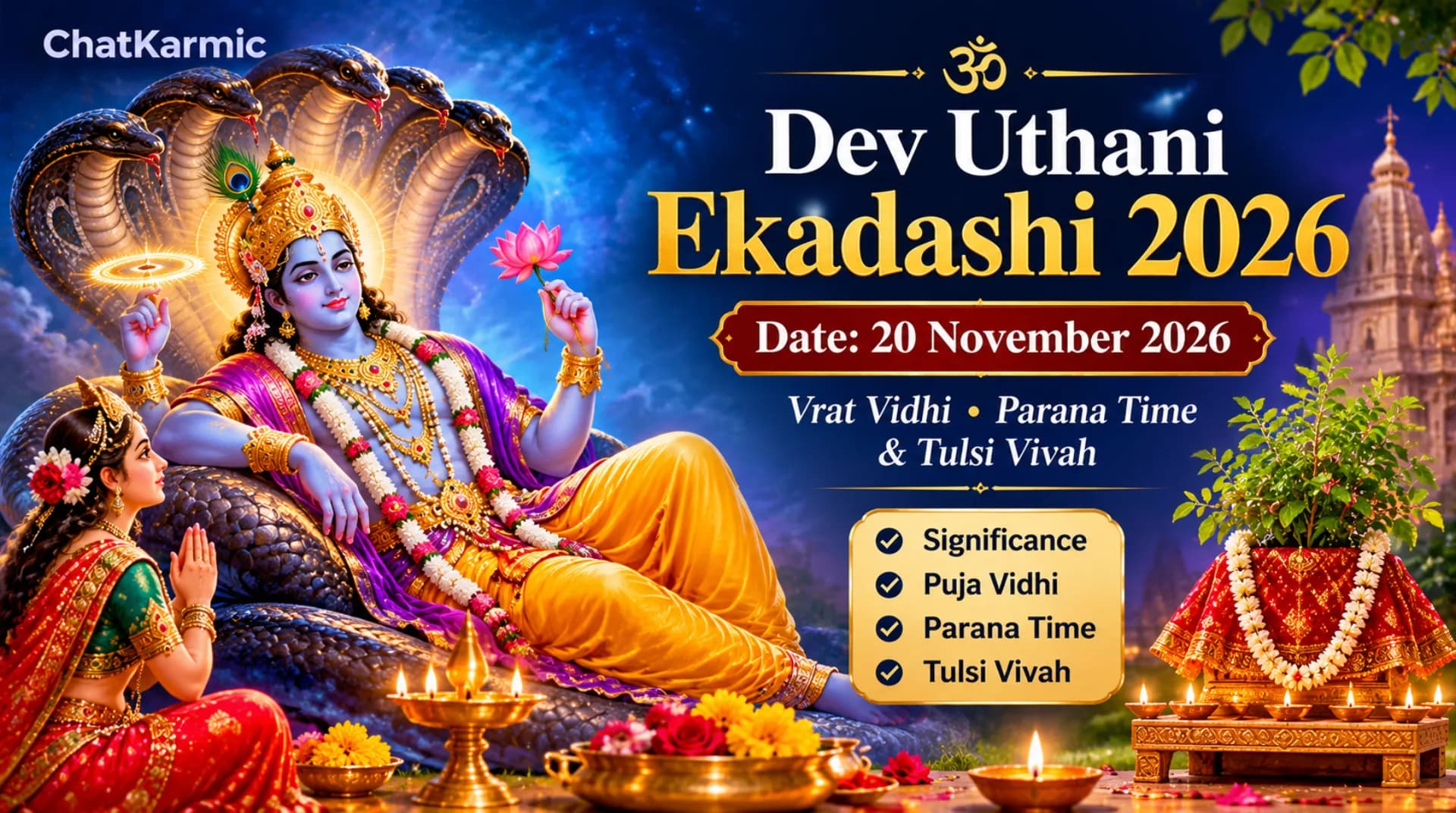
Dev Uthani Ekadashi 2026: Date, Vrat Vidhi, Parana Time & Tulsi Vivah
When Is Dev Uthani Ekadashi 2026?
Dev Uthani Ekadashi 2026 will be observed on Friday, November 20, 2026, according to the Smarta calendar for New Delhi. Some Vaishnava traditions will observe Gauna Devutthana Ekadashi on Saturday, November 21.
Also known as Prabodhini Ekadashi and Devutthana Ekadashi, this sacred day falls on the Shukla Paksha Ekadashi of the Kartik month. It is associated with the traditional belief that Lord Vishnu awakens from Yoga Nidra, marking the end of Chaturmas.
The dates can differ between Smarta and Vaishnava observances, so it is important to check which tradition your family or temple follows.
Dev Uthani Ekadashi 2026: Important Dates and Timings
The following timings are for New Delhi, India:
Smarta Dev Uthani Ekadashi: Friday, November 20, 2026
Ekadashi Tithi begins: 7:15 AM on November 20
Ekadashi Tithi ends: 6:31 AM on November 21
Smarta Parana: Saturday, November 21, from 1:11 PM to 3:18 PM
Hari Vasara ends: 12:07 PM on November 21
Gauna / Vaishnava Ekadashi: Saturday, November 21
Vaishnava Parana: Sunday, November 22, from 6:49 AM to 8:56 AM
Tulsi Vivah: Saturday, November 21, 2026
These are location-specific Panchang timings. They may vary by city and by the calendar tradition followed. Check your local Panchang before deciding the fasting and Parana schedule.
Why Is Dev Uthani Ekadashi Celebrated?
According to Hindu religious tradition, Lord Vishnu enters Yoga Nidra at the beginning of Chaturmas, traditionally associated with Devshayani Ekadashi. He is believed to awaken on Prabodhini Ekadashi, also called Dev Uthani Ekadashi.
The word Prabodhini refers to awakening. The name Dev Uthani also carries the same idea: the awakening of the divine.
Chaturmas is traditionally treated as a period of spiritual discipline, prayer and restraint. With the arrival of Dev Uthani Ekadashi, this period comes to an end in many Hindu traditions.
The day is therefore considered significant for devotees of Lord Vishnu. Many observe a fast, offer prayers and participate in devotional activities.
It is also associated with the beginning of the traditional Hindu wedding season, although the actual start of wedding ceremonies depends on the regional calendar and auspicious dates.
Dev Uthani Ekadashi Vrat Vidhi
The way devotees observe the fast can differ between families, regions and Vaishnava traditions. The following is a commonly followed outline.
1. Take a Sankalp
Wake up early, bathe and prepare for the day. Clean the place of worship and take a personal sankalp to observe the Ekadashi vrat according to your capacity and family tradition.
2. Worship Lord Vishnu
Offer prayers to Lord Vishnu or Shri Krishna. Place flowers, fruits, incense and a diya before the deity. Tulsi leaves are traditionally offered during Vishnu worship.
You may chant a Vishnu mantra, recite the Vishnu Sahasranama or read passages from the Bhagavad Gita, according to your practice.
A commonly recited mantra is:
Om Namo Bhagavate Vasudevaya
3. Observe the Fast
Devotees follow different forms of fasting. Some observe a strict fast, while others consume fruits, milk or permitted vrat food.
In many traditions, rice, wheat, regular grains and pulses are avoided on Ekadashi. Foods such as fruits, potatoes, milk, sabudana, kuttu and singhara flour may be used by those following a phalahari or vrat diet.
Food rules are not identical across all communities. Follow the customs of your household or sampradaya.
4. Spend Time in Prayer and Devotion
Devotees may spend the day listening to Vishnu-related stories, chanting, reading religious texts or visiting a temple.
Some households also light a lamp in the evening and sing devotional bhajans.
5. Perform Parana on Dwadashi
Parana means breaking the Ekadashi fast. It is traditionally performed on the following Dwadashi, within the prescribed time and after Hari Vasara has ended.
Do not use the Ekadashi Tithi end time as the Parana time. The Parana window is calculated separately.
Smarta and Vaishnava Ekadashi: Why Are There Two Dates?
One common question about Dev Uthani Ekadashi is why some calendars show November 20 while others show November 21.
The difference comes from the observance rules followed by different Hindu traditions.
Smarta observance: The 2026 Smarta Dev Uthani Ekadashi fast for New Delhi is on Friday, November 20. Its Parana is on Saturday, November 21, from 1:11 PM to 3:18 PM.
Vaishnava observance: Some Vaishnava traditions follow Gauna Devutthana Ekadashi on Saturday, November 21. Its Parana for New Delhi is on Sunday, November 22, from 6:49 AM to 8:56 AM.
These dates are not simply two different opinions about the same calendar. They reflect different traditional rules for determining the fasting day.
When observing the vrat, follow the calendar used by your temple, spiritual tradition or family.
Tulsi Vivah 2026: Date and Significance
Tulsi Vivah will be observed on Saturday, November 21, 2026, in New Delhi.
Tulsi Vivah is the symbolic ceremonial marriage of Goddess Tulsi with Lord Vishnu, often represented by the Shaligram Shila or an image of Lord Vishnu or Krishna.
The ritual is traditionally performed during the Kartik Shukla Dwadashi period. It is associated with the end of Chaturmas and the beginning of the traditional Hindu marriage season.
For the New Delhi calendar, Dwadashi Tithi begins at 6:31 AM on November 21 and ends at 4:56 AM on November 22.
How Is Tulsi Vivah Celebrated?
The exact customs differ by region and household, but a traditional observance may include:
Cleaning and decorating the area around the Tulsi plant.
Decorating the Tulsi pot or platform with flowers, rangoli and a small mandap.
Dressing the Tulsi plant in traditional ceremonial decorations.
Placing a Shaligram Shila or image of Lord Vishnu as the groom.
Offering flowers, fruits, sweets and prayers.
Performing the symbolic wedding rituals and aarti.
Many families celebrate Tulsi Vivah in the evening. Check the local Panchang and household tradition for the appropriate time.
What Foods Are Avoided During Dev Uthani Ekadashi?
In many Hindu fasting traditions, devotees avoid regular grains and pulses on Ekadashi. Commonly avoided foods include:
Rice
Wheat and regular flour
Lentils and pulses
Regular cereals and grain-based meals
Onion and garlic in households that follow these restrictions
People who observe a phalahari fast may consume fruits, milk, nuts and selected fasting foods. Sabudana, potato, kuttu flour and singhara flour are commonly used in some regions.
However, fasting rules differ. Some traditions follow stricter rules than others, and not every fasting ingredient is accepted by every community.
Choose a form of fasting suitable for your health and circumstances. A strict or waterless fast is not appropriate for everyone.
Frequently Asked Questions About Dev Uthani Ekadashi 2026
Is Dev Uthani Ekadashi on November 20 or 21 in 2026?
The Smarta observance for New Delhi is on Friday, November 20. Some Vaishnava traditions observe Gauna Devutthana Ekadashi on Saturday, November 21.
When is Dev Uthani Ekadashi Parana in 2026?
For the New Delhi Smarta observance, Parana is on November 21 from 1:11 PM to 3:18 PM. For the Vaishnava observance on November 21, Parana is on November 22 from 6:49 AM to 8:56 AM.
When is Tulsi Vivah in 2026?
Tulsi Vivah is on Saturday, November 21, 2026, for New Delhi.
Why is Dev Uthani Ekadashi also called Prabodhini Ekadashi?
It is called Prabodhini Ekadashi because Hindu tradition associates this day with Lord Vishnu awakening from Yoga Nidra after the Chaturmas period.
Can we eat fruits during Dev Uthani Ekadashi?
Many devotees follow a phalahari fast and consume fruits, milk and permitted fasting foods. The exact rules depend on family and regional traditions.
Is Dev Uthani Ekadashi the beginning of the wedding season?
It traditionally marks the end of Chaturmas and is associated with the resumption of auspicious Hindu ceremonies, including weddings. Actual wedding dates still depend on the local Panchang and muhurat.
The Spiritual Meaning of Dev Uthani Ekadashi
Dev Uthani Ekadashi is more than a fasting date on the Hindu calendar. It represents awakening, devotion and the return to spiritual discipline after Chaturmas.
For devotees, it is an opportunity to offer prayers to Lord Vishnu, practise self-restraint and renew their commitment to faith.
Whether you observe the Smarta or Vaishnava calendar, the most important thing is to understand the tradition you follow and observe the vrat with sincerity.
Note: All dates and timings in this article are based on the New Delhi Panchang for 2026. Tithi calculations and fasting observances can vary by location and tradition. Please confirm the timings for your city and follow the guidance of your family or temple tradition.
AI-powered astrological guidance based on your exact birth details — available 24/7
Try ChatKarmic Free →