Dussehra 2026: Date, Vijay Muhurat, Puja Vidhi & Significance
Dussehra 2026: Date, Vijay Muhurat, Puja Vidhi and Significance
Dussehra, also known as Vijayadashami, is one of the major Hindu festivals celebrating the victory of good over evil. It follows the Navratri celebrations and carries deep religious and cultural significance across India.
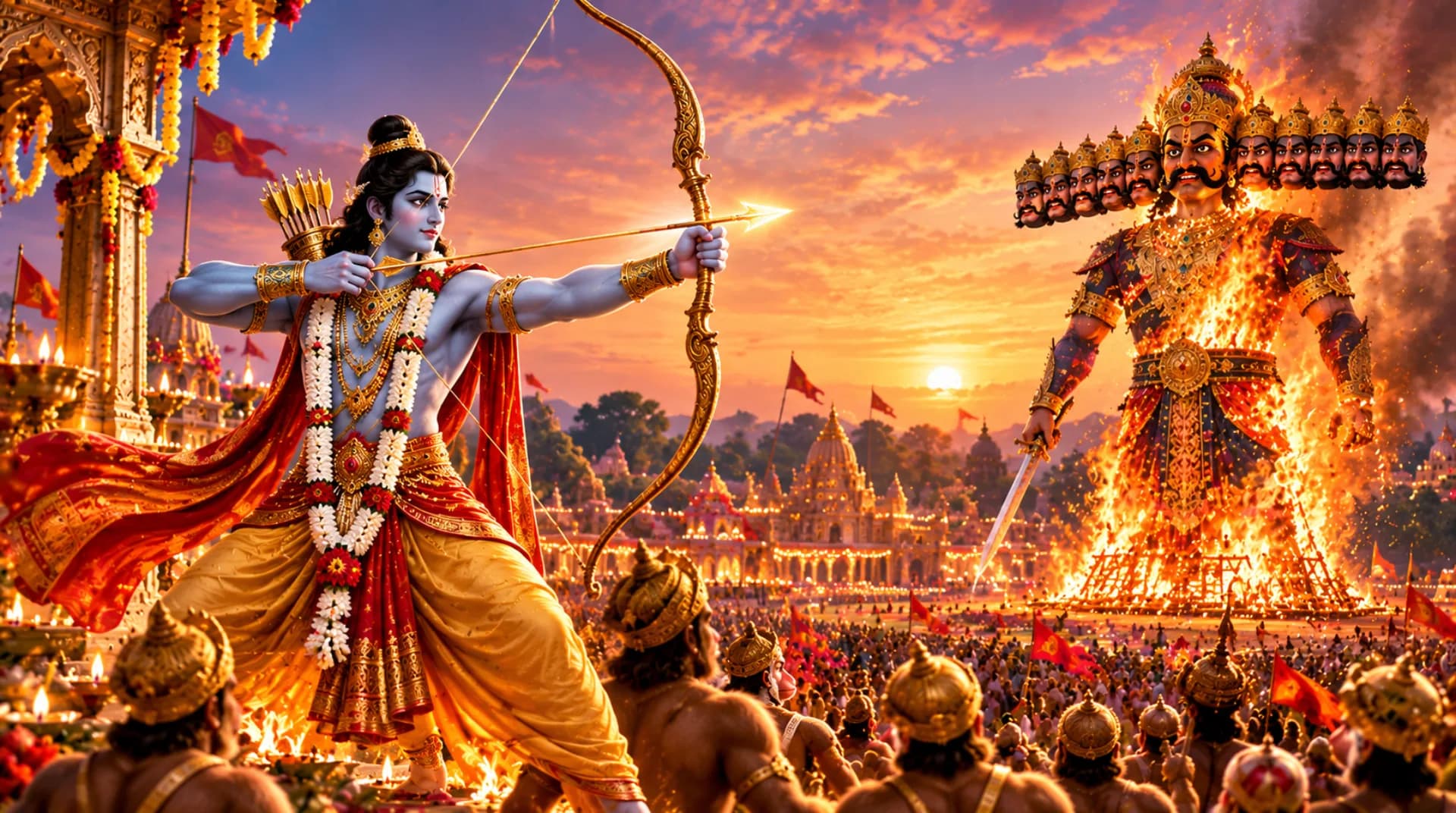
The festival is associated with two important traditions: Lord Rama's victory over Ravana in the Ramayana and Goddess Durga's victory over Mahishasura. Families visit temples, participate in prayers, watch Ramlila performances and gather to witness Ravana Dahan.
In 2026, Dussehra is observed on Tuesday, October 20, in Delhi and many parts of North India. However, regional calendars differ, and Bengal's Vijayadashami and Mysuru's famous Jumboo Savari take place on October 21.
Dussehra 2026: Date and Vijay Muhurat
Here are the key details for Dussehra 2026:
Date: Tuesday, October 20, 2026, for the main Delhi observance
Festival name: Vijayadashami or Dussehra
Vijay Muhurat in Delhi: 1:59 PM to 2:45 PM IST
Dashami Tithi begins: 12:50 PM on October 20
Dashami Tithi ends: 2:11 PM on October 21
Bengal Vijayadashami: Wednesday, October 21, 2026
These timings are based on the Delhi Panchang. Puja timings may differ by location and tradition, so check your local Panchang before planning a ritual.
Why Is Dussehra Celebrated?
Dussehra has more than one major religious interpretation, and both express the triumph of righteousness over wrongdoing.
1. Lord Rama's Victory Over Ravana
According to the Ramayana, Ravana abducted Sita, the wife of Lord Rama. Rama, supported by Lakshmana, Hanuman and the Vanara army, fought a battle against Ravana and ultimately defeated him.
Dussehra commemorates this victory. In many parts of India, the festival is marked by Ramlila performances that narrate episodes from the Ramayana, followed by the burning of effigies of Ravana, Kumbhakarna and Meghnad.
The story is remembered as a reminder of the importance of righteousness, courage, responsibility and humility.
2. Goddess Durga's Victory Over Mahishasura
In another important tradition, Vijayadashami marks Goddess Durga's victory over Mahishasura, a powerful demon who threatened the divine order.
This tradition is particularly significant in the Durga Puja celebrations of eastern India. After days of worship, devotees bid farewell to Goddess Durga and celebrate her victory.
Both traditions give Vijayadashami its enduring message: the victory of good over evil.
Dussehra Puja Vidhi
The rituals performed on Dussehra differ by region and family tradition. Many households offer prayers to Lord Rama, Goddess Durga or other deities they worship.
A simple home puja can include the following steps.
Puja Samagri
Picture or idol of the deity
Diya and ghee or oil
Flowers
Roli or kumkum
Akshat, or uncooked rice
Incense or dhoop
Fruits and customary prasad
Water and other items used in your family tradition
Step-by-Step Puja
1. Clean the puja area
Prepare the worship space and arrange the items required for your family's puja.
2. Light a diya
Light the diya and incense, then offer a prayer to the deity.
3. Offer flowers and prasad
Offer flowers, akshat, fruits and other customary items with devotion.
4. Recite prayers
Read a prayer or devotional text associated with Lord Rama, Goddess Durga or the deity your family worships.
5. Perform aarti
Conclude the puja with aarti and distribute prasad among family members.
If your family observes Vijay Muhurat, Shami Puja or Aparajita Puja, follow the appropriate local Panchang and established tradition.
What Is Vijay Muhurat on Dussehra?
Vijay Muhurat is an auspicious period associated with Vijayadashami. In Hindu traditions, it is considered favourable for beginning certain activities and performing specific rituals.
For Delhi, the listed Vijay Muhurat on October 20, 2026, is 1:59 PM to 2:45 PM IST.
Some devotees use this period for prayers, Shami Puja or other customary observances. The suitability of a particular activity depends on family and regional practice.
Do not apply Delhi timings throughout India. Local sunrise, tithi calculations and Panchang conventions can change the relevant window.
What Is Shami Puja?
Shami Puja is a traditional Vijayadashami observance in several Hindu communities. The Shami tree is associated in popular traditions with auspiciousness, strength and victory.
Some families worship the tree, offer prayers and exchange Shami leaves as a symbolic gesture of goodwill and prosperity. Practices differ by region, and not every household performs this ritual.
What Is Aparajita Puja?
Aparajita Puja is another ritual associated with Vijayadashami in certain traditions. Aparajita, whose name means “the unconquered one,” is worshipped as a form of the Divine Feminine.
The ritual is associated with blessings, strength and victory. Its method and timing should be followed according to the local Panchang and family customs.
Why Is Ravana Dahan Performed?
Ravana Dahan is one of the best-known Dussehra traditions in North India. Large effigies of Ravana are burned at public grounds, often alongside effigies of Kumbhakarna and Meghnad.
The event usually follows a Ramlila performance depicting the final battle between Rama and Ravana. Families gather to watch the performances and festivities.
Symbolically, Ravana Dahan represents the defeat of evil and the importance of overcoming negative qualities. Interpretations vary, but the broader message of righteousness and responsibility remains central to the celebration.
Ravana Dahan is not observed in the same way everywhere. Some regions focus on Durga Puja, processions, temple rituals or other local traditions instead.
How Is Dussehra Celebrated Across India?
North India
Ramlila performances, temple visits, prayers and Ravana Dahan are prominent features of Dussehra in many North Indian cities. Public celebrations often attract large crowds.
West Bengal
Vijayadashami marks the concluding day of Durga Puja celebrations. Devotees perform farewell rituals for Goddess Durga, and many communities organise processions associated with the immersion of Durga idols.
In 2026, Bengal Vijayadashami is listed for Wednesday, October 21.
Mysuru, Karnataka
Mysuru Dasara is famous for its royal traditions, cultural programmes and the grand Jumboo Savari procession. The celebration centres on Goddess Chamundeshwari's victory over Mahishasura.
According to the official Mysuru Dasara schedule, the Jumboo Savari takes place on October 21, 2026.
Other Regional Traditions
In parts of India, Vijayadashami is associated with starting new learning, worshipping tools and vehicles, or seeking blessings before beginning a new venture. Ayudha Puja is especially significant in several southern Indian traditions.
The festival's customs vary, reflecting the many cultural and devotional traditions across the country.
Is Dussehra on October 20 or 21 in 2026?
Both dates appear in festival calendars because regional traditions and Panchang calculations do not always use the same observance date.
For Delhi, Drik Panchang lists Vijayadashami on October 20, 2026, with the Dashami Tithi continuing into October 21. Bengal Vijayadashami is listed on October 21, and Mysuru's official festival schedule also places its grand procession on that date.
Therefore, the correct date depends on the particular regional observance. For home puja, use your local Panchang rather than assuming that one date applies to every part of India.
Frequently Asked Questions
1. When is Dussehra in 2026?
Dussehra is observed on Tuesday, October 20, 2026, in Delhi and many parts of North India. Some regional observances take place on October 21.
2. What is the Vijay Muhurat in Delhi for Dussehra 2026?
The listed Vijay Muhurat is 1:59 PM to 2:45 PM IST on October 20, 2026. Confirm local timings before performing a ritual.
3. Why is Ravana Dahan performed?
Ravana Dahan commemorates Lord Rama's victory over Ravana and symbolises the triumph of good over evil in the Ramayana tradition.
4. Why is Vijayadashami associated with Goddess Durga?
In the Durga tradition, Vijayadashami marks Goddess Durga's victory over Mahishasura and the restoration of divine order.
5. What is Shami Puja on Dussehra?
Shami Puja is a traditional observance in which devotees worship the Shami tree, associated in some Hindu traditions with victory and auspiciousness.
6. When is Mysuru Dasara's Jumboo Savari in 2026?
The official Mysuru Dasara programme schedules the Jumboo Savari for Wednesday, October 21, 2026.
Conclusion
Dussehra is a celebration of victory, courage and the enduring importance of righteousness. Whether people observe the day through Rama Puja, Durga Puja, Shami Puja, Ramlila or Ravana Dahan, the festival brings together India's diverse religious and cultural traditions.
As Vijayadashami arrives, devotees reflect on the values of truth, humility, responsibility and faith. The festival's message extends beyond a single day's celebration: it encourages people to choose what is right even when the path is difficult.
Happy Dussehra! Jai Shri Ram! Jai Mata Di!
Explore More on ChatKarmic
AI-powered astrological guidance based on your exact birth details — available 24/7
Try ChatKarmic Free →