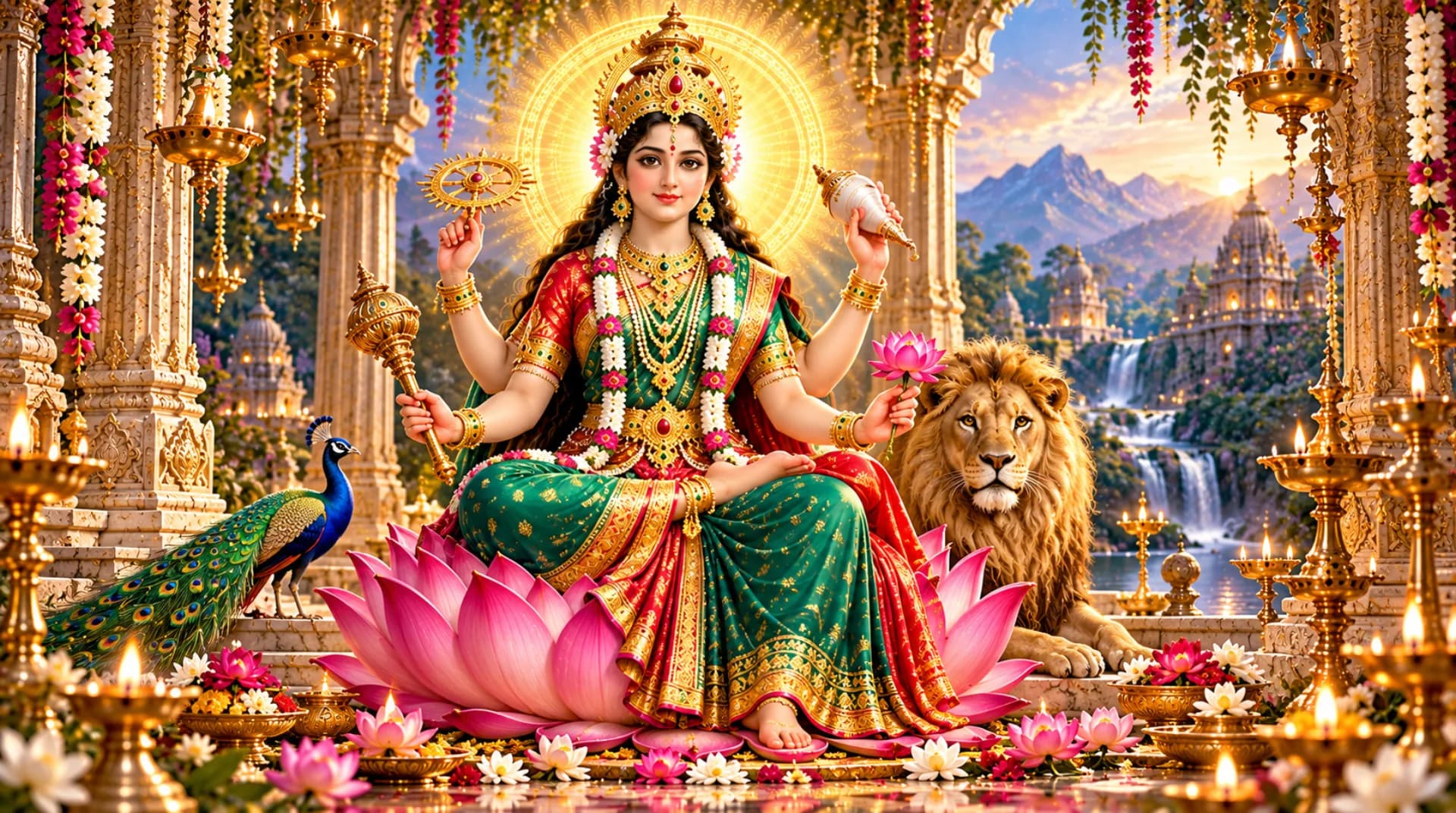
Maa Siddhidatri 2026: Mantra, Puja Vidhi, Bhog & Significance
Maa Siddhidatri 2026: Mantra, Puja Vidhi, Bhog and Significance
Sharad Navratri celebrates the nine forms of Goddess Durga and the qualities they represent. On the ninth day, devotees worship Maa Siddhidatri, the final form of Navadurga. Her name is associated with the bestowal of siddhis, or spiritual attainments, and her worship represents devotion, wisdom and spiritual fulfilment.
In the commonly followed Navratri sequence, Day 9 falls on Monday, October 19, 2026. This day is associated with Maa Siddhidatri and the concluding Navratri observances. Because the Ashtami and Navami tithis can affect ritual dates, check your local Panchang before planning a specific puja muhurat or Kanya Pujan.
When Is Maa Siddhidatri Puja in 2026?
Date: Monday, October 19, 2026, in the commonly followed daywise sequence
Occasion: Navratri Day 9 — Mahanavami
Goddess: Maa Siddhidatri
Popular colour: Peacock green
Traditional offerings: Sesame seeds in some traditions; halwa, puri and black chickpeas are common Navami or Kanya Pujan foods
Main mantra: ॐ देवी सिद्धिदात्र्यै नमः॥
The nine forms of Durga are worshipped during Navratri, and Maa Siddhidatri is the ninth and final form. Her worship marks the completion of the Navadurga sequence.
Calendar note: Some regional calendars place Durga Ashtami and Maha Navami observances on October 19, 2026, while others may follow a different ritual schedule. Verify local tithi and sunrise calculations before publishing a specific muhurat.
Who Is Maa Siddhidatri?
Maa Siddhidatri is the ninth form of Goddess Durga in the Navadurga tradition. Her name combines siddhi, meaning attainment or accomplishment, and datri, meaning giver.
Traditional depictions show her with four arms, seated on a lotus or sometimes associated with a lion. Her hands commonly hold a discus, conch, mace and lotus. She is portrayed with a serene expression and a radiant divine aura.
In Hindu devotional traditions, Maa Siddhidatri is associated with spiritual wisdom, devotion and the fulfilment of spiritual aspirations. Her worship offers devotees an opportunity to reflect on the purpose of their efforts, the value of discipline and the importance of gratitude.
Maa Siddhidatri Mantra
Devotees commonly chant this mantra during worship:
ॐ देवी सिद्धिदात्र्यै नमः॥
Transliteration: Om Devi Siddhidatryai Namah.
Meaning: Salutations to Goddess Siddhidatri, the giver of siddhis.
You may recite the mantra during your morning puja or meditation. Some traditions recommend 108 repetitions, while others follow their own family practices.
Maa Siddhidatri Prarthana Mantra
सिद्धगन्धर्वयक्षाद्यैरसुरैरमरैरपि।
सेव्यमाना सदा भूयात् सिद्धिदा सिद्धिदायिनी॥
This traditional prayer describes the goddess as one who is worshipped by divine and celestial beings and invokes her blessings.
Maa Siddhidatri Puja Vidhi
A simple home puja can be performed with devotion and traditional offerings. Follow your family's established practices and check your local Panchang if a particular muhurat is important.
Puja Samagri
Picture or idol of Maa Siddhidatri
Diya and ghee or oil
Incense or dhoop
Flowers
Roli or kumkum
Akshat (uncooked rice)
Water
Fruits and customary prasad
Sesame seeds or other offerings followed by your family
Step-by-Step Puja
1. Prepare the worship area
Clean the puja space and prepare for worship according to your household's customs.
2. Light the diya
Light a diya and incense, then offer a prayer to Maa Siddhidatri.
3. Offer flowers and customary items
Offer flowers, roli, akshat and water with devotion.
4. Present the bhog
Offer sesame seeds or a traditional sweet according to your family's practice. Halwa, puri and black chickpeas are also commonly prepared for Navami and Kanya Pujan.
5. Chant the mantra
Recite “ॐ देवी सिद्धिदात्र्यै नमः॥” and, if customary, read the prarthana mantra or other devotional prayers.
6. Perform aarti
Conclude with aarti and distribute the prasad among family members.
These are general devotional steps, not a substitute for temple-specific rituals or local Panchang guidance.
What Bhog Is Offered to Maa Siddhidatri?
Offerings vary between regional and family traditions. Sesame seeds and sesame-based preparations are mentioned in some Navratri devotional guides. Halwa, puri and black chickpeas are also widely associated with Navami and Kanya Pujan meals.
Follow the offering custom observed in your household. A simple, sincere offering is appropriate; an elaborate spread is not necessary.
What Is the Colour for Navratri Day 9 in 2026?
Peacock green is the colour listed for Navratri Day 9 in several popular 2026 colour calendars. It is often associated with freshness, harmony and renewal.
Devotees who follow the colour tradition may wear peacock green or include it in their festive attire. Colour sequences differ between sources and regional customs, and wearing a particular colour is not compulsory.
Why Is Maa Siddhidatri Worshipped?
Maa Siddhidatri represents spiritual accomplishment and the completion of the Navadurga journey. In Hindu devotional traditions, she is revered as the giver of siddhis and is associated with wisdom, devotion and spiritual fulfilment.
Her worship can be an opportunity to reflect on the lessons of the nine days: courage, patience, compassion, strength, clarity and faith. The concluding day encourages devotees to express gratitude and carry these values into daily life.
These are religious and spiritual interpretations, not guarantees of particular supernatural or material outcomes.
Maha Navami, Havan and Kanya Pujan in 2026
Many households mark the conclusion of Navratri with Maha Navami puja, havan, Kanya Pujan or a combination of these rituals. The order and date vary by family and region.
During Kanya Pujan, young girls are traditionally honoured as manifestations of the Divine Feminine. Families may offer food, gifts and prayers according to their customs. Halwa, puri and black chickpeas are common foods served during this ritual.
Important: Ashtami and Navami tithi timings in 2026 can create differences in observance dates. Check your local Panchang for the correct tithi and muhurat instead of assuming that every region performs Kanya Pujan at the same time.
Navratri Vrat: What Can You Eat?
Fasting practices differ by family and region. Foods commonly included in many Navratri vrat traditions are:
Fruits and milk
Makhana
Sabudana
Kuttu or singhara flour preparations
Samak rice
Potatoes and permitted vegetables
Sendha namak, where customary
Follow the rules that apply to your household and health needs. Strict fasting is not suitable for everyone; children, pregnant people, older adults and people with medical conditions should prioritise appropriate nutrition and medical advice.
Frequently Asked Questions
1. When is Maa Siddhidatri Puja in 2026?
Monday, October 19, 2026, is Day 9 in the commonly followed Navratri sequence. Check your local Panchang for the applicable tithi and ritual timings.
2. What is the mantra of Maa Siddhidatri?
The commonly recited mantra is “ॐ देवी सिद्धिदात्र्यै नमः॥” (Om Devi Siddhidatryai Namah).
3. What bhog is offered to Maa Siddhidatri?
Sesame seeds are mentioned in some traditions. Halwa, puri and black chickpeas are also common foods prepared for Navami and Kanya Pujan.
4. Which colour is associated with Navratri Day 9 in 2026?
Peacock green is listed in several popular 2026 Navratri colour guides. Regional customs may differ.
5. When should Kanya Pujan be performed in 2026?
The date depends on the local Ashtami or Navami observance and family tradition. Check your local Panchang before arranging the ritual.
6. What does Maa Siddhidatri represent?
She is associated with spiritual attainments, wisdom, devotion and spiritual fulfilment in Hindu devotional traditions.
Conclusion
Maa Siddhidatri, the ninth form of Goddess Durga, represents spiritual fulfilment and the completion of the Navadurga journey. Devotees honour her with prayers, mantra recitation, traditional offerings and concluding Navratri rituals.
As the nine-day festival comes to an end, her worship offers a moment to reflect on gratitude, inner growth and the values developed throughout Navratri.
Jai Mata Di!
Explore More Navratri Guides
AI-powered astrological guidance based on your exact birth details — available 24/7
Try ChatKarmic Free →