Maa Mahagauri 2026: Mantra, Puja Vidhi, Bhog & Significance
Maa Mahagauri 2026: Mantra, Puja Vidhi, Bhog and Significance
Navratri celebrates the many forms of Goddess Durga and the qualities they represent. On the eighth day, devotees worship Maa Mahagauri, the eighth form of Navadurga. Her serene appearance and white attire are traditionally associated with purity, peace, compassion and spiritual renewal.
In 2026, October 18 is commonly listed as Navratri Day 8. However, the observance of Maha Ashtami and Kanya Pujan can depend on the local Panchang and the timing of the Ashtami tithi. Check local timings before planning rituals.
When Is Maa Mahagauri Puja in 2026?
Date: Sunday, October 18, 2026, in common Navratri daywise listings
Occasion: Navratri Day 8 — Ashtami
Goddess: Maa Mahagauri
Popular colour: Purple in several 2026 colour lists
Traditional bhog: Coconut
Main mantra: ॐ देवी महागौर्यै नमः॥
The Navadurga are worshipped over the nine days of Navratri. Maa Mahagauri is the eighth form and is honoured for her gentle, peaceful and auspicious qualities.
Calendar reminder: Maha Ashtami rituals may be observed on a different civil date depending on the local sunrise-based tithi calculation. Confirm the date and muhurat using a trusted local Panchang, particularly if you plan to perform Kanya Pujan.
Who Is Maa Mahagauri?
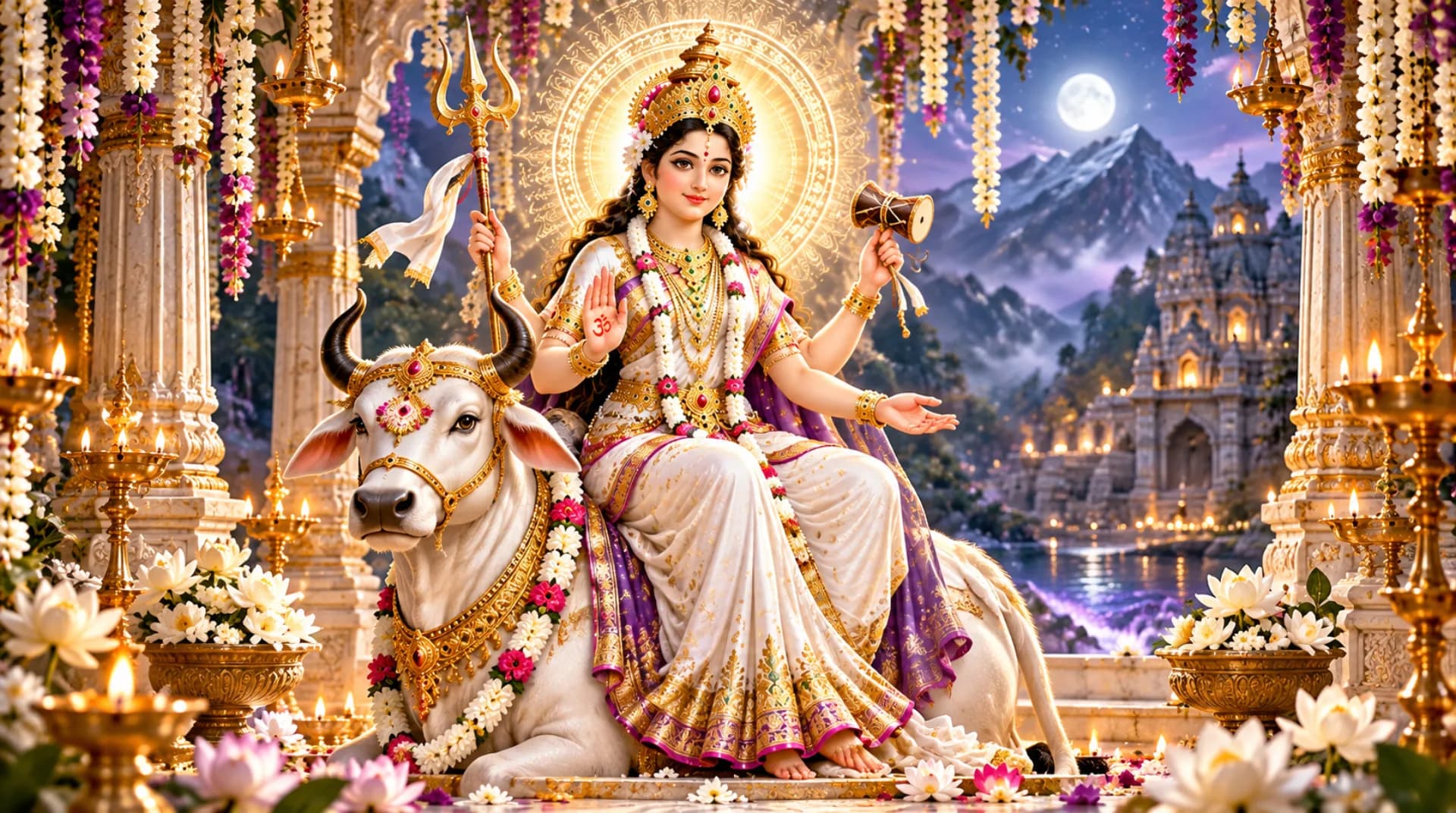
Maa Mahagauri is the eighth form of Goddess Durga in the Navadurga tradition. Her name is commonly associated with great brightness or radiance. Traditional depictions show her dressed in white, with four arms, riding a white bull.
She is often portrayed holding a trident and a damaru, with her other hands showing blessing and protection. The white imagery surrounding her is associated with serenity, purity and peace.
In Hindu devotional traditions, Maa Mahagauri represents the hope for a calmer mind, compassionate conduct and spiritual renewal. Her worship offers devotees an opportunity to reflect on forgiveness, inner peace and the importance of responding to difficulties with patience.
Maa Mahagauri Mantra
Devotees commonly chant the following mantra during worship:
ॐ देवी महागौर्यै नमः॥
Transliteration: Om Devi Mahagauryai Namah.
Meaning: Salutations to Goddess Mahagauri.
You may recite this mantra during your puja or meditation. Some traditions recommend 108 repetitions, while others follow their own family practices.
Maa Mahagauri Prarthana Mantra
श्वेते वृषेसमारूढा श्वेताम्बरधरा शुचिः।
महागौरी शुभं दद्यान्महादेव प्रमोददा॥
This traditional prayer describes Maa Mahagauri's white attire and bull mount and invokes her auspicious blessings.
Maa Mahagauri Puja Vidhi
A simple home puja can be performed with devotion and customary offerings. Follow your family's traditions and local Panchang where a specific muhurat is important.
Puja Samagri
Picture or idol of Maa Mahagauri
Diya and ghee or oil
Incense or dhoop
Flowers, preferably white if customary
Roli or kumkum
Akshat (uncooked rice)
Water
Coconut or coconut-based offering
Fruits and other customary prasad
Step-by-Step Puja
1. Prepare the worship area
Clean the puja space and bathe before worship, according to your household's practice.
2. Light a diya
Light a diya and incense, then offer a prayer to Maa Mahagauri.
3. Offer flowers and customary items
Offer flowers, roli, akshat and water. White flowers are used in some traditions, but local customs may differ.
4. Offer coconut as bhog
Coconut is a commonly mentioned offering for Maa Mahagauri. You may offer a whole coconut or a traditional coconut-based sweet.
5. Chant the mantra
Recite “ॐ देवी महागौर्यै नमः॥” with devotion. You may also read the prarthana mantra or other prayers followed by your family.
6. Perform aarti
Conclude the worship with aarti and distribute the prasad among family members.
These are general devotional steps. For temple-specific rituals, follow the relevant temple's instructions.
What Bhog Is Offered to Maa Mahagauri?
Coconut is a traditional offering associated with Maa Mahagauri. Some devotees offer coconut-based sweets or include coconut in their prasad.
The offering need not be elaborate. Devotees can follow their family customs and make an offering that is appropriate for their household.
What Is the Colour for Navratri Day 8 in 2026?
Purple is included as the colour for Day 8 in several popular 2026 Navratri colour lists. It is often associated with dignity, spiritual depth and devotion.
If you follow the colour tradition, you may wear purple clothing or include the colour in your festive attire. Navratri colour sequences vary by source and regional custom, and wearing a particular colour is not compulsory.
Why Is Maa Mahagauri Worshipped?
Maa Mahagauri's peaceful form is traditionally associated with purity, calmness, compassion and auspiciousness. Devotees worship her while seeking spiritual strength, peace of mind and harmony in their lives.
Her white attire and serene imagery encourage reflection on letting go of resentment, cultivating patience and approaching life's challenges with a clear mind. These are devotional interpretations rather than guaranteed outcomes.
Maha Ashtami and Kanya Pujan in 2026
Maha Ashtami is an important day of Navratri for many Hindu families. Some households perform Kanya Pujan or Kanjak Puja on Ashtami, while others observe it on Navami.
During Kanya Pujan, young girls are traditionally honoured as manifestations of the Divine Feminine. Families may wash their feet, offer food and gifts, and seek their blessings, according to their customs.
Important: The date and muhurat depend on the local Panchang and Ashtami tithi. Because tithi timings can cross midnight or extend into the following civil day, do not assume that every region observes Kanya Pujan on the same date. Confirm locally before arranging the ritual.
Navratri Day 8 Vrat: What Can You Eat?
Fasting customs differ by region and family. Foods commonly used in many Navratri vrat traditions include:
Fruits and milk
Makhana
Sabudana
Kuttu or singhara flour preparations
Samak rice
Potatoes and permitted vegetables
Sendha namak, where customary
Follow the rules that apply to your family and your health needs. Strict fasting is not suitable for everyone; children, pregnant people, older adults and people with medical conditions should prioritise appropriate nutrition and medical advice.
Frequently Asked Questions
1. When is Maa Mahagauri Puja in 2026?
October 18, 2026, is commonly listed as Navratri Day 8. The local observance of Maha Ashtami may differ depending on the Panchang and tithi timings.
2. What is the mantra of Maa Mahagauri?
The commonly recited mantra is “ॐ देवी महागौर्यै नमः॥” (Om Devi Mahagauryai Namah).
3. What bhog is offered to Maa Mahagauri?
Coconut is a traditional offering associated with Maa Mahagauri. Some devotees also offer coconut-based sweets.
4. Which colour is associated with Navratri Day 8 in 2026?
Purple is listed in several popular 2026 Navratri colour guides. Regional traditions and published colour sequences can vary.
5. When should Kanya Pujan be performed in 2026?
Kanya Pujan is commonly performed on Ashtami or Navami, depending on family tradition. Check the local Panchang for the applicable tithi and muhurat.
6. Can Maa Mahagauri Puja be performed at home?
Yes. Devotees can perform a simple home puja with a diya, flowers, mantra recitation and customary offerings, following their family's practice.
Conclusion
Maa Mahagauri, the eighth form of Goddess Durga, represents peace, purity and auspiciousness in Hindu devotional traditions. Devotees honour her with prayers, mantra recitation and traditional offerings such as coconut.
As Navratri approaches its final days, her worship can be an opportunity to cultivate patience, compassion and inner calm. Follow your local Panchang for Ashtami-related rituals and celebrate according to your family's customs.
Jai Mata Di!
Explore More Navratri Guides
AI-powered astrological guidance based on your exact birth details — available 24/7
Try ChatKarmic Free →