Maa Kalaratri 2026: Mantra, Puja Vidhi, Bhog & Significance
Maa Kalaratri 2026: Mantra, Puja Vidhi, Bhog and Significance
Sharad Navratri is a celebration of the many forms and qualities of Goddess Durga. On the seventh day, devotees worship Maa Kalaratri, the fierce and powerful seventh form of Navadurga. Her appearance may seem fearsome, but her symbolism is deeply associated with protection, courage and the triumph of light over darkness.
In 2026, Navratri Day 7 falls on Saturday, October 17. Devotees commonly offer jaggery as bhog, chant Maa Kalaratri's mantra and follow grey as the traditional colour associated with the day. Ritual practices and tithi timings can vary by location and family tradition.
When Is Maa Kalaratri Puja in 2026?
Date: Saturday, October 17, 2026
Occasion: Sharad Navratri, Day 7
Tithi: Shukla Paksha Saptami; consult your local Panchang for exact timings
Goddess: Maa Kalaratri
Popular colour: Grey
Traditional bhog: Jaggery (gur)
Main mantra: ॐ देवी कालरात्र्यै नमः॥
The nine forms of Durga are worshipped on successive days of Navratri. Maa Kalaratri is the seventh form, traditionally honoured for her protective and fearless nature.
Who Is Maa Kalaratri?
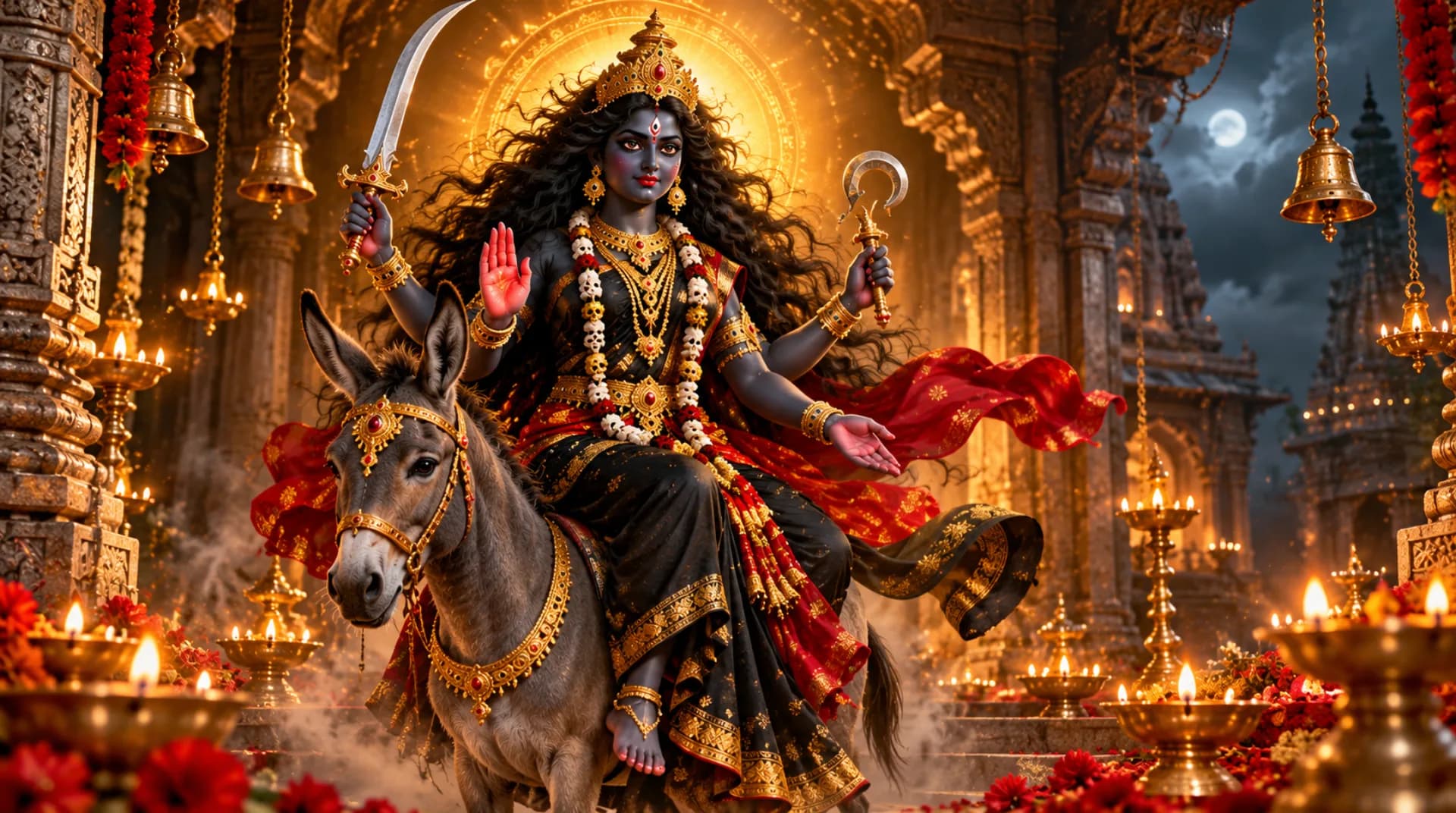
Maa Kalaratri is one of the most powerful and fearsome forms of Goddess Durga. Traditional depictions show her with a dark complexion, dishevelled hair, three eyes and four hands. She is commonly shown riding a donkey and carrying a sword and an iron hook, while her other hands offer protection and blessings.
Despite her fierce appearance, Maa Kalaratri is also known as Shubhankari, a name associated with auspiciousness and doing good. Her form reminds devotees that confronting fear and darkness can be part of the path toward courage, clarity and spiritual strength.
In Hindu devotional traditions, she represents the power that destroys harmful forces and protects devotees from fear.
Maa Kalaratri Mantra
Devotees can chant this traditional mantra during worship:
ॐ देवी कालरात्र्यै नमः॥
Transliteration: Om Devi Kalaratryai Namah.
Meaning: Salutations to Goddess Kalaratri.
The mantra may be recited quietly during meditation or as part of the daily Navratri puja. Some traditions recommend chanting it 108 times, though devotees may follow their family practice.
Maa Kalaratri Prarthana Mantra
एकवेणी जपाकर्णपूरा नग्ना खरास्थिता।
लम्बोष्ठी कर्णिकाकर्णी तैलाभ्यक्तशरीरिणी॥
वामपादोल्लसल्लोहलताकण्टकभूषणा।
वर्धनमूर्धध्वजा कृष्णा कालरात्रिर्भयङ्करी॥
This traditional prayer describes the goddess's distinctive and fearsome form. For accurate pronunciation, devotees can follow a trusted Sanskrit prayer text or their family's established recitation.
Maa Kalaratri Puja Vidhi
A simple home puja can be performed with devotion and the materials available in your household.
Puja Samagri
Picture or idol of Maa Kalaratri
Diya and ghee or oil
Incense or dhoop
Roli or kumkum
Akshat (uncooked rice)
Flowers
Water
Jaggery or a traditional sweet offering
Fruits and other customary prasad
Step-by-Step Puja
1. Clean the worship area
Begin by cleaning the puja space and bathing before worship, according to your household's practice.
2. Light the diya
Light a diya and incense, then offer a prayer to Maa Kalaratri with a calm and respectful mind.
3. Offer flowers and customary items
Offer flowers, roli, akshat and water according to your tradition. There is no need to make the ritual complicated.
4. Offer jaggery as bhog
Jaggery, known as gur, is a commonly offered bhog for Maa Kalaratri. You may offer plain jaggery or a traditional sweet prepared with it.
5. Chant the mantra
Recite “ॐ देवी कालरात्र्यै नमः॥” and, if customary, read the prarthana or other devotional prayers.
6. Perform aarti
Conclude with aarti and distribute the prasad among family members.
These are general devotional steps, not a substitute for a specific family or temple tradition. Follow your local Panchang if you need a precise muhurat.
What Bhog Is Offered to Maa Kalaratri?
Jaggery (gur) is commonly offered to Maa Kalaratri on the seventh day of Navratri. Some devotees also prepare sweets using jaggery and distribute them as prasad.
The offering can be simple. In devotional practice, sincerity and following one's family tradition are often considered more important than preparing an elaborate spread.
What Is the Colour for Navratri Day 7 in 2026?
Grey is the popular colour associated with Navratri Day 7 in many 2026 colour lists. It is often interpreted as representing balance, steadiness and strength in challenging circumstances.
Devotees who follow the colour tradition may wear grey clothing or include grey in their festive attire. These colours are customary rather than compulsory, and the sequence can differ between regional calendars and traditions.
Why Is Maa Kalaratri Worshipped?
Maa Kalaratri's fierce appearance carries a protective meaning in Hindu devotional traditions. Her worship is associated with courage, protection and the overcoming of fear, darkness and obstacles.
Her name evokes the darkness of night, while her title Shubhankari highlights the auspicious aspect of her form. Together, these ideas remind devotees that strength does not always appear gentle and that difficult challenges can require determination and courage.
The spiritual meaning of her worship is not limited to seeking protection. It can also be a time to reflect on inner fears, face difficulties with greater resolve and act with compassion.
Navratri Day 7 Vrat: What Can You Eat?
Fasting practices differ by region, family and personal observance. Common foods in many Navratri vrat traditions include:
Fruits and milk
Makhana
Sabudana
Kuttu or singhara flour preparations
Samak rice
Potatoes and permitted vegetables
Sendha namak, where customary
Follow the rules that apply to your household and health needs. Strict fasting is not suitable for everyone; children, pregnant people, older adults and those with medical conditions should prioritise appropriate nutrition and medical advice.
Frequently Asked Questions
1. When is Maa Kalaratri Puja in 2026?
Maa Kalaratri is worshipped on Navratri Day 7, which falls on Saturday, October 17, 2026. Check a local Panchang for the exact Saptami timings.
2. What is the mantra of Maa Kalaratri?
The commonly recited mantra is “ॐ देवी कालरात्र्यै नमः॥” (Om Devi Kalaratryai Namah).
3. What bhog is offered to Maa Kalaratri?
Jaggery (gur) is a traditional offering. Some households prepare sweets made with jaggery.
4. Which colour is associated with Navratri Day 7 in 2026?
Grey is the popular colour in many 2026 Navratri colour lists. Regional and family traditions may differ.
5. What does Maa Kalaratri symbolise?
Her fierce form symbolises protection, courage and the destruction of harmful forces. She is also known as Shubhankari, associated with auspiciousness.
6. Can Maa Kalaratri Puja be performed at home?
Yes. Devotees commonly perform a simple home puja with a diya, flowers, a mantra and a customary offering, following their family tradition.
Conclusion
Maa Kalaratri, the seventh form of Goddess Durga, represents fierce protection and the courage to face darkness. On Navratri Day 7, devotees honour her with prayers, mantra recitation and traditional offerings such as jaggery.
Whether you follow a detailed puja or offer a simple prayer at home, the day can serve as a reminder to meet life's challenges with courage, steadiness and faith.
जय माता दी!
Explore More Navratri Guides
AI-powered astrological guidance based on your exact birth details — available 24/7
Try ChatKarmic Free →