Maa Kushmanda 2026: Mantra, Puja Vidhi, Bhog & Significance
Maa Kushmanda 2026: Mantra, Puja Vidhi, Bhog and Significance
Shardiya Navratri is a nine-day festival dedicated to the different forms of Goddess Durga. On the fourth day, devotees worship Maa Kushmanda, the fourth form of Navdurga. In Hindu tradition, she is associated with the creation of the universe, radiant energy and the light that sustains life.
In 2026, Navratri Day 4 falls on Wednesday, October 14. Devotees observe the day with prayers, mantra chanting, traditional offerings and, according to their family customs, fasting. Malpua is a commonly listed bhog for Maa Kushmanda, while royal blue is the popular colour associated with the day.
This guide explains Maa Kushmanda's story, her traditional mantra, a simple home puja vidhi, common offerings, the significance of royal blue and frequently asked questions.
Who Is Maa Kushmanda?
Maa Kushmanda is the fourth of the nine forms of Goddess Durga, collectively known as Navdurga. According to Hindu devotional tradition, she brought the universe into existence with her divine smile when darkness prevailed. Her radiant form is associated with the beginning of creation, cosmic energy and the light that illuminates the universe.
Her name is traditionally connected with the Sanskrit word Brahmanda, meaning the universe or cosmic egg. She is also associated with Kushmanda, a term used for ash gourd or pumpkin in Sanskrit-derived usage.
Maa Kushmanda is worshipped as a source of vitality, positivity and creative energy. Her story is remembered as a celebration of the divine power that brings light and order into existence.
Maa Kushmanda's Form and Symbols
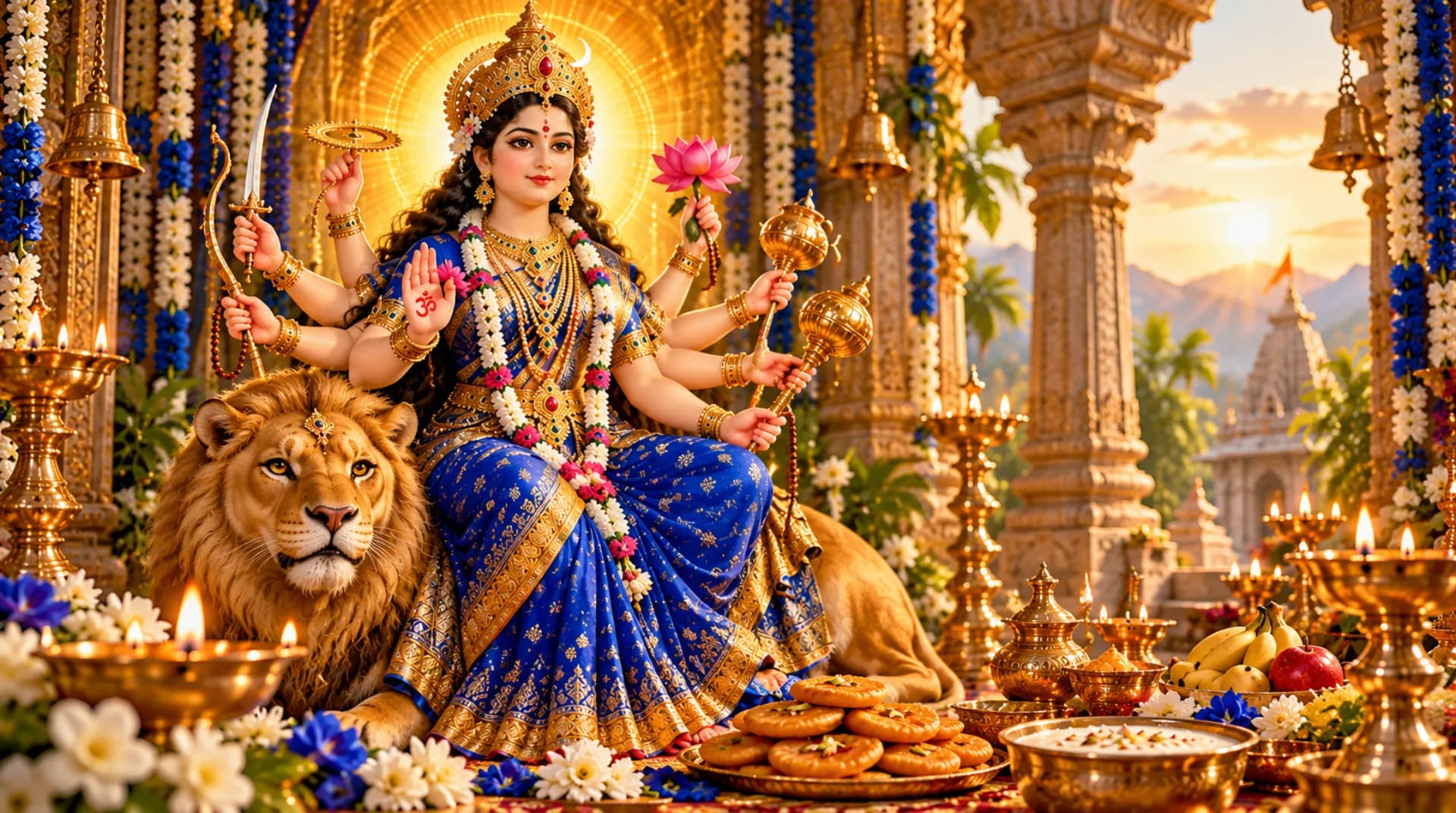
Maa Kushmanda is commonly depicted with eight arms and is therefore also known as Ashtabhuja Devi. Her hands may carry sacred objects such as a kamandalu, bow, arrow, lotus, chakra, mace, rosary and a pot associated with divine nectar. The specific objects can vary across depictions.
She is traditionally shown riding a lion, symbolising courage, strength and fearlessness. Her radiant appearance is also linked to the Sun, which represents light, warmth and the energy necessary for life.
The symbolism of Maa Kushmanda can be understood through several qualities:
Creation: Her story celebrates the beginning of the universe and the emergence of light from darkness.
Energy and vitality: Her radiant form represents the life-giving energy associated with the Sun.
Courage: Her lion mount symbolises strength and the confidence to face challenges.
Hope and new beginnings: Her association with creation offers devotees a reminder that change and renewal are always possible.
These meanings make the fourth day of Navratri an opportunity for prayer, reflection and renewed commitment to positive action.
Maa Kushmanda Mantra
Devotees commonly chant the following mantra while worshipping Maa Kushmanda:
ॐ देवी कूष्माण्डायै नमः॥
Transliteration: Om Devi Kushmandayai Namah.
Meaning: I bow to Goddess Kushmanda.
Devotees may recite this mantra during morning or evening worship. Those who follow a regular japa practice may repeat it 11, 21 or 108 times according to their personal or family tradition. These counts are common options, not a requirement for everyone.
Maa Kushmanda Prarthana Mantra
सुरासम्पूर्णकलशं रुधिराप्लुतमेव च।
दधाना हस्तपद्माभ्यां कूष्माण्डा शुभदास्तु मे॥
This traditional prayer invokes Maa Kushmanda and seeks her auspicious grace. Devotees may recite it as part of their customary worship.
Maa Kushmanda Puja Vidhi for Navratri Day 4
Maa Kushmanda can be worshipped at home by following personal and family traditions. A simple puja may include the following steps.
Step 1: Prepare the Puja Space
Bathe, wear clean clothes and clean the prayer area. Place an image or idol of Maa Durga or Maa Kushmanda in the designated worship space.
Step 2: Continue the Kalash Worship
If Ghatasthapana was performed on the first day of Navratri, continue worshipping the Kalash according to your household tradition.
Step 3: Light a Diya
Light a diya before the Goddess. Incense may also be offered if it is part of your practice. Keep the flame in a safe place, away from curtains and other flammable materials.
Step 4: Offer Flowers and Puja Samagri
Offer fresh flowers, roli or kumkum, akshat, water and other items customary in your household puja. Drik Panchang lists red flowers among the offerings associated with Maa Kushmanda.
Step 5: Offer Bhog
Offer malpua or another suitable vegetarian preparation according to your tradition. Fruits and other simple sattvic offerings may also be included.
Step 6: Chant the Mantra
Recite “ॐ देवी कूष्माण्डायै नमः॥” with devotion and concentration. You may also read the prarthana mantra or another Durga prayer followed by your family.
Step 7: Perform Aarti
Conclude the puja with aarti and pray for peace, wisdom, strength and well-being. After the worship, distribute the bhog as prasad.
The precise sequence and puja materials vary across households and regions. A simple, sincere prayer is also a meaningful form of worship; elaborate rituals are not compulsory for everyone.
What Bhog Is Offered to Maa Kushmanda?
Malpua is commonly listed as a traditional sweet offering for Maa Kushmanda on the fourth day of Navratri. It is often prepared using ingredients such as flour, milk and sugar, though recipes vary by region.
Other offerings mentioned in devotional traditions include:
Petha or ash gourd: Associated with the name Kushmanda in some traditional explanations.
Halwa: A sweet preparation offered in some households.
Curd: Included among the offerings in some regional devotional practices.
Fruits and other sattvic foods: Chosen according to family custom.
There is no single list of offerings followed by every community. Devotees should follow the practices customary to their household and region. Those observing a Navratri fast should select offerings and foods that comply with their usual vrat rules.
After the puja, the bhog is shared as prasad among family members and other devotees.
Navratri Day 4 Colour 2026: Why Is Royal Blue Associated with the Day?
Royal blue is the commonly listed colour for Wednesday, October 14, 2026, the fourth day of Navratri. In popular Navratri colour traditions, it is associated with confidence, strength, dignity and tranquillity.
Devotees who follow this custom may wear royal blue clothing or include the colour in their festive attire. The colour tradition is a popular way to celebrate each day of Navratri, but it is not a compulsory condition for worship.
Navratri colour sequences can vary according to regional practices and calendars. Devotees may follow the tradition observed by their family or community.
Maa Kushmanda Katha: The Goddess Associated with Creation
According to Hindu tradition, darkness prevailed before the universe came into existence. Maa Kushmanda is believed to have created the universe through her divine smile, bringing light and setting creation in motion.
Her radiant form is associated with the Sun, the source of warmth and illumination. Some devotional traditions describe her as residing at the centre of the Sun, symbolising the source of the energy that sustains life.
Maa Kushmanda's eight-armed form represents her divine powers, while her lion mount expresses courage and strength. Her story is remembered as a reminder of the emergence of light from darkness and the possibility of renewal.
For devotees, this account carries a spiritual message: new beginnings can emerge from difficult circumstances, and hope can help people move forward with determination.
Spiritual Significance of Maa Kushmanda
Worshipping Maa Kushmanda during Navratri is associated with creation, vitality, positivity and renewal.
Embracing new beginnings: Her creation story reminds devotees that a new beginning is possible even after periods of difficulty or uncertainty.
Cultivating positive energy: Her radiant form is a symbol of light and vitality. The day offers an opportunity to reflect on how to bring more positivity into everyday life.
Building courage: The Goddess's lion mount symbolises strength and confidence in facing challenges.
Practising gratitude: Her association with the Sun and life-giving energy can inspire gratitude for the resources and relationships that sustain daily life.
Strengthening devotion: Mantra chanting, prayers and traditional offerings provide devotees with an opportunity to renew their spiritual practice.
These are devotional interpretations rather than promises of specific material or physical outcomes.
Frequently Asked Questions About Maa Kushmanda
1. When is Maa Kushmanda Puja in 2026?
Maa Kushmanda is worshipped on the fourth day of Shardiya Navratri, which falls on Wednesday, October 14, 2026.
2. What is the mantra of Maa Kushmanda?
The commonly recited mantra is “ॐ देवी कूष्माण्डायै नमः॥” (Om Devi Kushmandayai Namah).
3. What bhog is offered to Maa Kushmanda?
Malpua is commonly listed as a traditional offering. Some households also offer petha or ash gourd, halwa, curd, fruits and other vegetarian preparations according to regional custom.
4. Which colour is associated with Navratri Day 4 in 2026?
Royal blue is the commonly listed colour for October 14, 2026. Wearing it is optional, and regional traditions may differ.
5. Can Maa Kushmanda be worshipped at home?
Yes. Devotees can worship the Goddess at home with an image or idol, a diya, flowers, suitable bhog, mantra chanting and aarti according to their household tradition.
6. Why is Maa Kushmanda associated with the creation of the universe?
In Hindu devotional tradition, Maa Kushmanda is believed to have brought the universe into existence with her divine smile. Her story symbolises creation, light and the energy that sustains life.
7. What does Maa Kushmanda's eight-armed form represent?
Her eight arms hold various sacred objects and symbolise her divine powers. She is also known as Ashtabhuja Devi. Details of her attributes may vary across traditional depictions.
Celebrate Navratri Day 4 with Maa Kushmanda's Worship
Maa Kushmanda's worship on the fourth day of Shardiya Navratri celebrates creation, light, vitality and new beginnings. Through prayers, mantra chanting and traditional offerings, devotees honour the Goddess and reflect on the importance of hope, courage and positive action.
May Maa Kushmanda bless everyone with peace, strength, wisdom and positivity.
Jai Mata Di!
For the complete festival calendar, Ghatasthapana information and an overview of all nine forms of Goddess Durga, read our Shardiya Navratri 2026 guide. You can also read our articles on Maa Brahmacharini and Maa Chandraghanta.
AI-powered astrological guidance based on your exact birth details — available 24/7
Try ChatKarmic Free →