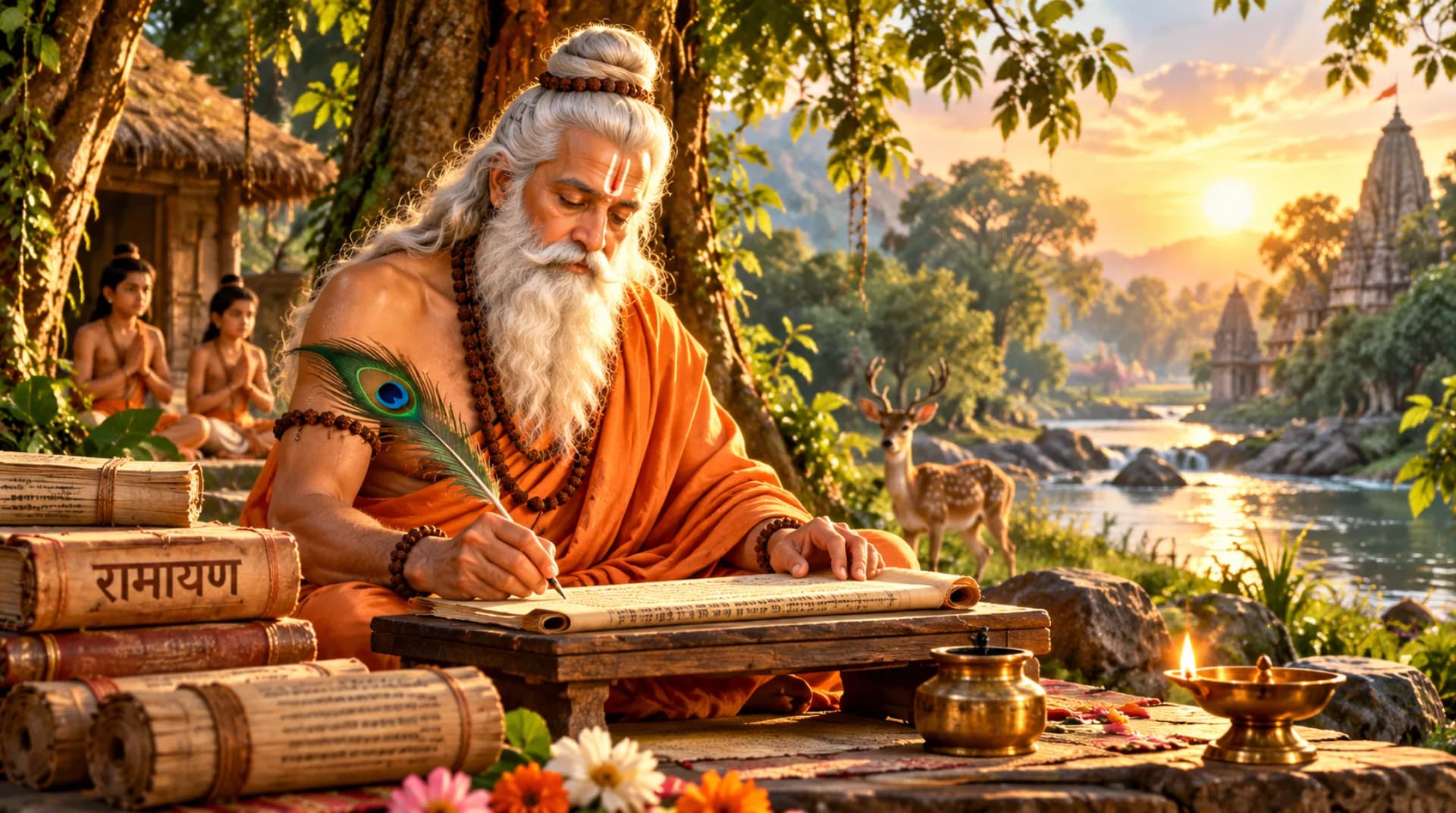
Maharishi Valmiki Jayanti 2026: Significance, Puja Vidhi & Teachings
Maharishi Valmiki Jayanti 2026: Significance, Puja Vidhi and Teachings
Maharishi Valmiki Jayanti is a Hindu observance that honours Maharishi Valmiki, the revered sage traditionally regarded as the composer of the Sanskrit Ramayana. Known as the Adi Kavi, or the first poet, Valmiki holds an important place in India's spiritual, literary and cultural heritage.
In 2026, Maharishi Valmiki Jayanti falls on Monday, October 26, according to the commonly followed Hindu calendar. Devotees mark the occasion with prayers, Ramayana recitation, temple visits and community processions.
Beyond the celebrations, the day offers an opportunity to reflect on the enduring lessons associated with Valmiki's legacy: compassion, self-reflection, truth, duty and the possibility of personal transformation.
When Is Maharishi Valmiki Jayanti in 2026?
Date: Monday, October 26, 2026
Occasion: Maharishi Valmiki Jayanti, also known as Valmiki Pragat Diwas
Lunar date: Ashwin Purnima, the full moon day of the Ashwin month
Associated epic: The Ramayana
Traditional title: Adi Kavi, meaning the first poet
According to the commonly followed calendar, the Ashwin Purnima tithi begins on October 25 and ends on the morning of October 26. The observance is marked on October 26 in accordance with the tithi prevailing at sunrise.
Timings can differ by location, so consult a local Panchang if you wish to perform a ritual during a specific period.
Who Was Maharishi Valmiki?
Maharishi Valmiki is one of the most revered sages in Hindu tradition. He is traditionally credited with composing the Valmiki Ramayana, a foundational work of Sanskrit literature that narrates the life and journey of Lord Rama.
He is called the Adi Kavi because of his association with the beginnings of Sanskrit poetic composition. The Ramayana is traditionally described as comprising seven kandas, or books, and approximately 24,000 verses.
The epic explores ideas that remain relevant across generations, including duty, courage, loyalty, sacrifice, compassion and the consequences of one's decisions.
Valmiki's legacy extends beyond the Ramayana itself. In the epic's traditional narrative, he also provides shelter to Sita and becomes a teacher to her sons, Lava and Kusha.
The Traditional Story of Ratnakar's Transformation
A well-known traditional account describes Valmiki's early life under the name Ratnakar. According to this story, he lived as a forest robber before encountering the sage Narada.
The encounter prompted Ratnakar to reflect on his actions and the consequences of the life he was leading. He began a period of spiritual discipline and devotion, eventually becoming the revered sage known as Valmiki.
This account is part of religious tradition rather than independently verified modern biography. Its enduring significance lies in its message: a person's past does not have to determine their future.
The story encourages self-examination, accountability and the willingness to change. It also reminds readers that genuine transformation begins when a person recognises the consequences of their actions and chooses a different path.
How Did Maharishi Valmiki Compose the Ramayana?
The traditional account of the Ramayana's origin begins with a moment of compassion.
According to the opening narrative of the Valmiki Ramayana, the sage was travelling near the Tamasa River with his disciple Bharadwaja when he witnessed a hunter kill one bird from a pair of krauncha birds. Moved by the suffering of the surviving bird, Valmiki expressed his anguish in verse.
This verse is traditionally regarded as the first shloka and is associated with the emergence of Sanskrit poetic expression.
In the traditional narrative, Lord Brahma later inspires Valmiki to compose the story of Lord Rama. The sage then creates the Ramayana, recounting Rama's life, exile, search for Sita, alliance with Hanuman and Sugriva, battle with Ravana and return to Ayodhya.
The episode involving the birds highlights a central theme of Valmiki's legacy: compassion can inspire expression, reflection and lasting cultural contributions.
Maharishi Valmiki Jayanti Puja Vidhi
Devotees observe Valmiki Jayanti in different ways according to local and family traditions. A simple home observance can include prayers, flowers and reading a passage from the Ramayana.
Puja Samagri
Picture or representation of Maharishi Valmiki
A copy of the Ramayana, if available
Clean cloth for the puja area
Diya and ghee or oil
Flowers
Incense or dhoop
Fruits or traditional prasad
Water and other customary offerings
Step-by-Step Puja
1. Prepare the puja area
Clean the worship space and place a picture of Maharishi Valmiki on a clean cloth. You may place a copy of the Ramayana nearby.
2. Light a diya
Light a diya and incense according to your household's customs. Begin with a prayer expressing respect for the sage and his literary and spiritual legacy.
3. Offer flowers
Offer flowers and customary items with devotion. There is no need for elaborate arrangements to make a simple home observance meaningful.
4. Read the Ramayana
Read a passage from the Ramayana in Sanskrit, Hindi or a language you understand. Families may also share a story from the epic with children.
5. Reflect on the teachings
Take a moment to reflect on compassion, truth, responsibility and the importance of making thoughtful choices.
6. Distribute prasad
Conclude with a prayer and share the prasad with family members.
These are general devotional suggestions rather than mandatory rituals. Follow the customs observed in your family or community.
How Is Maharishi Valmiki Jayanti Celebrated?
Valmiki Jayanti is observed through a combination of religious, literary and community activities.
Ramayana Recitation
Many devotees read or recite passages from the Ramayana. The practice provides an opportunity to revisit the epic's stories and reflect on their ethical and spiritual themes.
Temple Visits and Prayers
Temples and community spaces may be decorated, and special prayers are offered in honour of Maharishi Valmiki.
Shobha Yatras
In several places, devotees organise processions featuring devotional songs, images of the sage and community participation. The scale and format of these celebrations vary by location.
Charity and Community Service
Some communities mark the day through food distribution, educational assistance and other charitable activities. Supporting children's education or donating useful books can be a meaningful way to reflect the values associated with learning and compassion.
Five Timeless Teachings Associated With Maharishi Valmiki
1. Transformation Begins With Self-Reflection
The traditional Ratnakar story encourages people to examine their actions honestly. Recognising mistakes is an important first step towards making better choices.
2. Compassion Can Inspire Great Work
The story of the krauncha birds links an emotional response to suffering with the emergence of poetry. It reminds us that empathy can influence what we create and how we treat others.
3. Actions Carry Responsibility
The Ramayana repeatedly explores the relationship between decisions and consequences. Valmiki's legacy encourages thoughtful action rather than ignoring the impact of our choices.
4. Knowledge Should Be Shared
In the epic's traditional narrative, Valmiki teaches Lava and Kusha. This aspect of the story highlights the importance of education, mentorship and passing knowledge to future generations.
5. Literature Can Shape Values
The Ramayana has influenced storytelling, performance, art and religious life across generations. Its continued presence demonstrates how literature can encourage reflection on courage, duty, relationships and moral responsibility.
These are interpretations drawn from the traditions and themes associated with Valmiki and the Ramayana, rather than a formal list of prescribed teachings.
Frequently Asked Questions
1. When is Maharishi Valmiki Jayanti in 2026?
Maharishi Valmiki Jayanti is observed on Monday, October 26, 2026, according to the commonly followed Hindu calendar.
2. Why is Maharishi Valmiki called the Adi Kavi?
He is traditionally called the Adi Kavi, meaning the first poet, because of his association with the origins of Sanskrit poetic composition and the Valmiki Ramayana.
3. What is Maharishi Valmiki famous for?
He is traditionally credited with composing the Sanskrit Ramayana, one of the most influential epics in Indian literature and religious tradition.
4. What is the traditional story of Ratnakar?
A traditional account describes Ratnakar as a forest robber who underwent a profound spiritual transformation after encountering Narada. He later became the sage revered as Maharishi Valmiki.
5. How can we celebrate Valmiki Jayanti at home?
You may offer prayers, read the Ramayana, reflect on the sage's legacy and share its stories with family members. Follow your household's customary practices.
6. What is the main message of Valmiki Jayanti?
The observance encourages reflection on knowledge, compassion, responsibility, ethical conduct and the possibility of personal transformation.
Conclusion
Maharishi Valmiki Jayanti honours a sage whose traditional legacy connects spiritual reflection with one of India's most enduring literary works. The Ramayana continues to influence culture, storytelling, art and discussions about duty and human relationships.
The day is an invitation to go beyond celebration and consider how compassion, learning and thoughtful action can shape everyday life. Valmiki's enduring place in Indian tradition reminds us that stories can preserve cultural memory while inspiring new generations to reflect on their own choices.
May the wisdom and values associated with Maharishi Valmiki inspire a life of compassion, knowledge and righteousness.
AI-powered astrological guidance based on your exact birth details — available 24/7
Try ChatKarmic Free →