Sarva Pitru Amavasya 2026: Date, Muhurat & Rituals
Sarva Pitru Amavasya 2026: Date, Shraddha Muhurat, Tarpan Vidhi and Significance
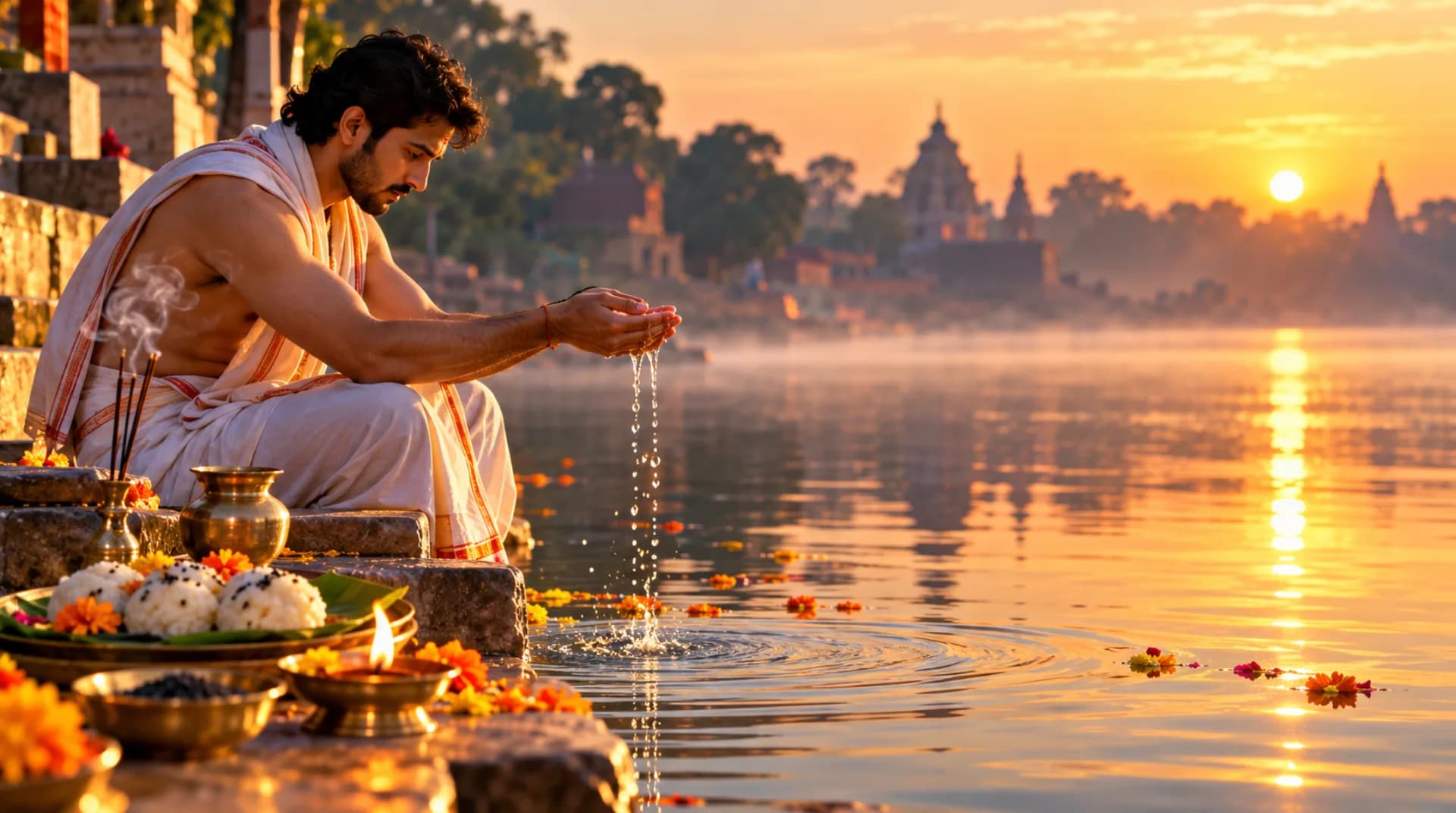
Sarva Pitru Amavasya, also known as Mahalaya Amavasya or Pitru Moksha Amavasya in some traditions, marks the concluding day of Pitru Paksha. In Hindu tradition, this observance is dedicated to remembering departed ancestors through Shraddha, Tarpan, prayers and acts of charity.
Sarva Pitru Amavasya 2026 will be observed on Saturday, October 10. It is especially significant for families who wish to honour multiple ancestors or do not know the exact lunar date of a relative’s passing.
Here is the date, New Delhi Panchang, Shraddha muhurat, traditional rituals and spiritual significance of this important observance.
Sarva Pitru Amavasya 2026: Date and Timings
Day: Saturday, October 10, 2026
Amavasya Tithi begins: October 9, 2026, at 9:35 PM
Amavasya Tithi ends: October 10, 2026, at 9:19 PM
Kutup Muhurat: 11:45 AM to 12:31 PM
Rohina Muhurat: 12:31 PM to 1:18 PM
Aparahna Kaal: 1:18 PM to 3:37 PM
All timings above are for New Delhi, India, according to Drik Panchang. Timings may differ by location, so check the local Panchang before planning a ritual.
Kutup and Rohina Muhurat, along with the prescribed Aparahna period, are traditionally considered suitable for Shraddha observances. Families should follow the procedure and timing customary in their tradition.
What Is Sarva Pitru Amavasya?
Sarva Pitru Amavasya is the Amavasya observance at the conclusion of Pitru Paksha, the period traditionally dedicated to honouring ancestors. “Sarva Pitru” means all ancestors, reflecting the collective remembrance associated with this day.
The observance is particularly important when a family does not know the exact death Tithi of an ancestor or could not perform the corresponding Shraddha during Pitru Paksha. It is also associated with prayers for multiple departed family members.
In Hindu tradition, remembrance is not limited to a formal ceremony. It is also an opportunity to acknowledge the lives, sacrifices, values and contributions of earlier generations.
Who Should Perform Shraddha on Sarva Pitru Amavasya?
According to commonly followed Hindu traditions, this day is especially relevant for:
Families who do not know the exact lunar Tithi on which an ancestor passed away.
Those who could not perform the prescribed Shraddha on the relevant day during Pitru Paksha.
Families offering collective prayers for several departed relatives.
Certain Tithi-specific observances, including those for ancestors associated with Amavasya, Purnima or Chaturdashi, according to the applicable tradition.
When an ancestor’s death Tithi is known, families generally follow the corresponding Shraddha day. Sarva Pitru Amavasya is an important collective observance, but it does not automatically replace every Tithi-specific ritual.
Customs can differ across regions, communities and family traditions. When unsure, consult a knowledgeable priest familiar with your family’s practice.
Sarva Pitru Amavasya Rituals: Tarpan, Shraddha and Pind Daan
The precise procedure varies, but these are among the most widely recognised observances associated with Pitru Paksha.
1. Tarpan
Tarpan is a traditional offering of water in remembrance of ancestors. In many practices, water is offered with black sesame seeds while prayers or prescribed mantras are recited.
The offering should be performed according to the method followed in the family or taught by a knowledgeable priest.
2. Shraddha
Shraddha is a ritual expression of reverence and gratitude towards departed ancestors. Depending on family custom, it may involve prayers, ritual offerings and a meal prepared for the observance.
Some families arrange the ceremony with the assistance of a priest, while others follow their established household traditions.
3. Pind Daan
Pind Daan involves making traditional offerings, commonly prepared from rice or other prescribed ingredients, as part of ancestral rites. The materials and procedure vary according to the ritual tradition.
Families undertaking Pind Daan at a pilgrimage site should check local arrangements and follow guidance appropriate to their tradition.
4. Food Offerings and Charity
Many families prepare food as part of Shraddha and offer meals or assistance to Brahmins, people in need or others specified by their tradition. Feeding animals may also be part of some household customs.
Charity is best approached as a sincere act of generosity rather than a transaction or a source of fear. The intention is to remember ancestors with respect and to help others.
5. Prayer and Family Remembrance
Not every family can arrange a formal ceremony. A quiet prayer, remembering departed relatives, sharing their stories with younger family members or helping someone in their memory can also be meaningful ways to honour their legacy.
If you cannot perform a particular ritual, avoid assuming that this alone brings misfortune. Customs and circumstances differ, and sincere remembrance need not be driven by anxiety.
Why Is Sarva Pitru Amavasya Spiritually Significant?
Pitru Paksha reflects the traditional Hindu understanding that family life is connected to earlier generations. The concept of Pitru Rin, or ancestral obligation, expresses gratitude for the lives, care, knowledge and opportunities received from those who came before us.
Sarva Pitru Amavasya brings this idea into focus through remembrance, prayer, ritual offerings and charity.
Its deeper message can also be understood beyond formal observance: preserving family memories, carrying forward positive values, caring for elders and supporting future generations are ways of recognising the influence of our ancestors in everyday life.
These are spiritual and cultural beliefs, not a guarantee of a particular material outcome.
Sarva Pitru Amavasya and Astrology
In traditional Hindu thought, Pitru Paksha is associated with reflection on family lineage, gratitude and ancestral duties. Some Jyotish traditions also examine the ninth house, the Sun and other chart factors when discussing a person’s relationship with lineage or the traditional concept of Pitru Dosha.
However, a festival date alone cannot establish whether someone has Pitru Dosha or predict problems in their life. Such interpretations belong to particular astrological traditions and require context from an individual horoscope.
It is best to approach these subjects without fear-based claims or promises that a single ritual will automatically remove every difficulty.
If you are exploring your birth chart, you can generate your Free Kundli on ChatKarmic and use it as a starting point for understanding traditional Jyotish concepts.
What Should You Keep in Mind on Sarva Pitru Amavasya?
Confirm the local Shraddha muhurat rather than relying on a time calculated for another city.
Follow your family’s established customs and seek knowledgeable guidance when necessary.
Treat offerings, prayers and charity as expressions of respect and remembrance.
Avoid fear-based claims that misfortune is inevitable if a particular ritual cannot be performed.
Remember that customs vary across Hindu communities and regions.
Frequently Asked Questions
When is Sarva Pitru Amavasya in 2026?
Sarva Pitru Amavasya Shraddha is observed on Saturday, October 10, 2026, in New Delhi. The Amavasya Tithi begins on October 9 at 9:35 PM and ends on October 10 at 9:19 PM.
What is the Shraddha muhurat for Sarva Pitru Amavasya 2026 in New Delhi?
The listed timings are Kutup Muhurat from 11:45 AM to 12:31 PM, Rohina Muhurat from 12:31 PM to 1:18 PM, and Aparahna Kaal from 1:18 PM to 3:37 PM. These timings are location-specific.
What if I do not know my ancestor’s death Tithi?
Sarva Pitru Amavasya is traditionally considered an important occasion for remembering ancestors when their exact death Tithi is unknown. Follow the customary procedure for your family or seek guidance from a knowledgeable priest.
Is Tarpan compulsory for everyone?
Practices differ according to family tradition, regional custom and personal circumstances. Tarpan is a common Pitru Paksha observance, but the procedure and expectations are not identical for every family.
Can I honour my ancestors if I cannot perform a formal Shraddha?
You can remember departed family members through prayer, reflection, charity and preserving their memories. If you have a specific ritual obligation, ask a knowledgeable person about alternatives consistent with your tradition.
Is Sarva Pitru Amavasya the same as Mahalaya Amavasya?
The names are commonly used for the concluding Amavasya of Pitru Paksha. Mahalaya also carries particular cultural significance in Bengal and is associated with the beginning of the Durga Puja season.
Remembering Our Ancestors with Gratitude
Sarva Pitru Amavasya is a time to pause and remember the people whose lives helped shape our own. Through traditional Shraddha, Tarpan, prayer, charity or a simple act of remembrance, families express gratitude for the generations that came before them.
May this observance bring reflection, compassion and a deeper appreciation of family bonds.
Panchang timings are location-specific. Religious practices vary by region and family tradition. This article presents general cultural and spiritual information rather than a personalised ritual prescription.
AI-powered astrological guidance based on your exact birth details — available 24/7
Try ChatKarmic Free →